The president talks reassurance, the coach answers with frustration: Sarri’s words before and after Verona lay bare the growing tension, on and off the market
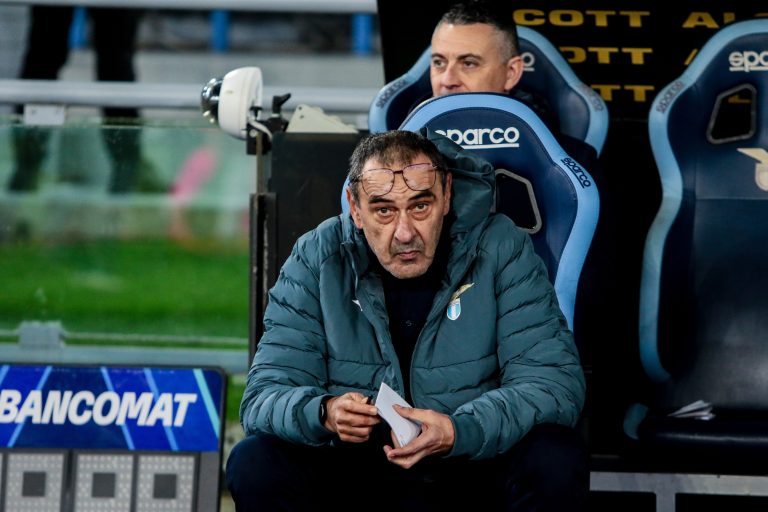
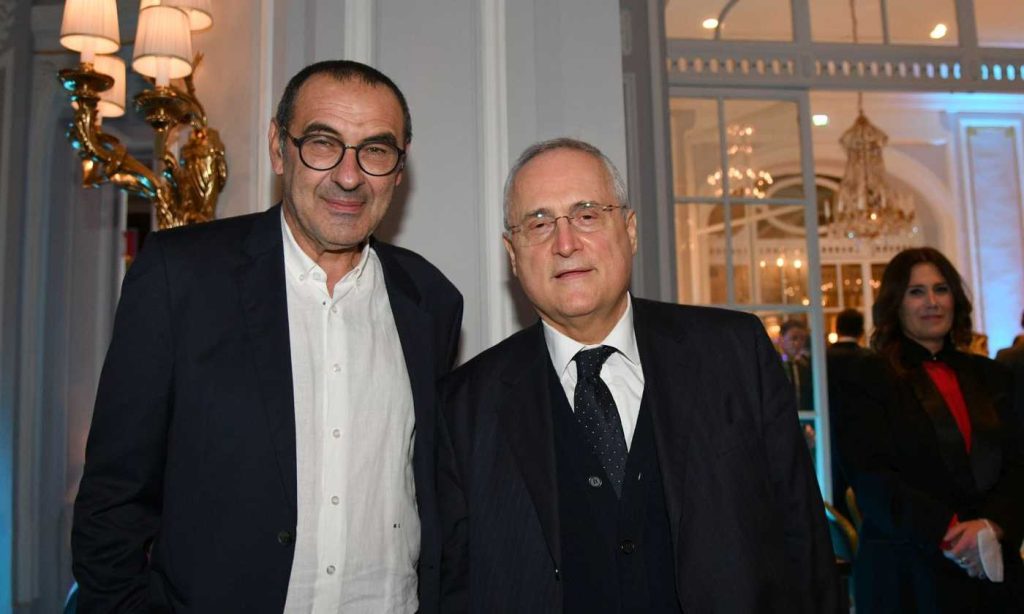
The distance between Claudio Lotito and Maurizio Sarri is becoming harder to ignore. The president tries to soften the edges, calling his coach a “world-class manager.” Sarri, however, refuses to lower the tone and delivers another sharp diagnosis:
“What’s shocking at Lazio is that every year it feels like year zero.”
Two worlds that have always struggled to coexist. On one side, a club perceived as irregular and episodic in its long-term planning; on the other, a coach who is ambitious, demanding and relentlessly honest. The more they know each other, the more incompatible they seem.
Market frustration and broken promises
The reopening of the transfer window has only sharpened the contrast. Sarri had hoped for stronger backing, in line with what he believed had been promised:
“In some roles you can get closer to the level you want, in others you don’t even get close.”
The reference is thinly veiled and points straight to the attacking department, starting with Petar Ratkov. Sarri is still waiting for another midfielder:
“I’d like a player with quantity, quality and a few goals. I think he’d cost around €80 million,”
he joked, laughing — but not too much.
Behind the irony lies a clear plan: build a core for the future.
“I’ll repay today’s players by improving them and trying to finish the season with eight or nine ready. If the club then helps us with three strong signings, we can make a real leap.”
Thrown straight in: Taylor and Ratkov
The current difficulties are evident. Sarri admitted something unprecedented in his career:
“It’s the first time ever — even including my amateur days — that I’ve thrown a player on after just one training session. That tells you everything about the situation we’re in.”
Kenneth Taylor was immediately deployed, despite Sarri knowing him only partially:
“I hope he can raise our technical level. With him and Ratkov I have positive feelings, but I need to understand their strengths and weaknesses quickly.”
Taylor, because of experience and profile, may adapt faster. Ratkov, younger and coming from a different league, could need more time — and Sarri is realistic about that.
Limits on the pitch and structural gaps
Asked whether Ratkov needs crosses to shine, Sarri replied with his trademark sarcasm:
“We weren’t built for that. Changing the brains of the other ten players isn’t easy.”
The coach insists patience is required:
“A player who arrived a few days ago can’t solve all the problems that have built up.”
The issues are systemic: limited attacking threat, no true deputy for Zaccagni, and players forced into unnatural roles.
“Cancellieri on the left is a completely different player,” Sarri admitted.
Between pride and dissatisfaction
Despite the criticism, Sarri praised the performance and the fans after Verona:
“I’m happy for the result, for the players and for the supporters. I was genuinely surprised by the away end — despite the age of the fans, I’d rarely seen anything like it.”
Yet the underlying dissatisfaction remains:
“I’m not happy. I’ve been saying all year that we’re not dangerous enough for how much we play.”
On individual evaluations, he was equally blunt. On Rovella:
“If he wants to be a starter, he’s still missing quite a lot.”
A clash of visions
The presence of former striker Alen Boksic in Verona stirred emotions, but nostalgia alone cannot bridge the gap between club and coach. Lotito speaks of history, patience and sustainability. Sarri talks about structure, continuity and ambition.
For now, they remain locked in a delicate coexistence — one built on mutual necessity rather than shared vision. And as Sarri’s words echo, the feeling persists: at Lazio, every season still risks starting from scratch.