Inter vs Lazio – Matchday 11 of Serie A sees title-chasing Inter take on a Lazio side that, after a rough spell, is climbing back toward European positions. We’ve already analyzed Inter in recent weeks, and by now Chivu’s football identity is clear: a relentless attacking approach that places the Nerazzurri among Europe’s elite in multiple statistical categories. Lazio, on the other hand, show some curious trends. Sarri himself has admitted that this squad doesn’t fully suit his footballing philosophy, and the data confirm it — their numbers are far from what you’d expect from a typical Sarri team.
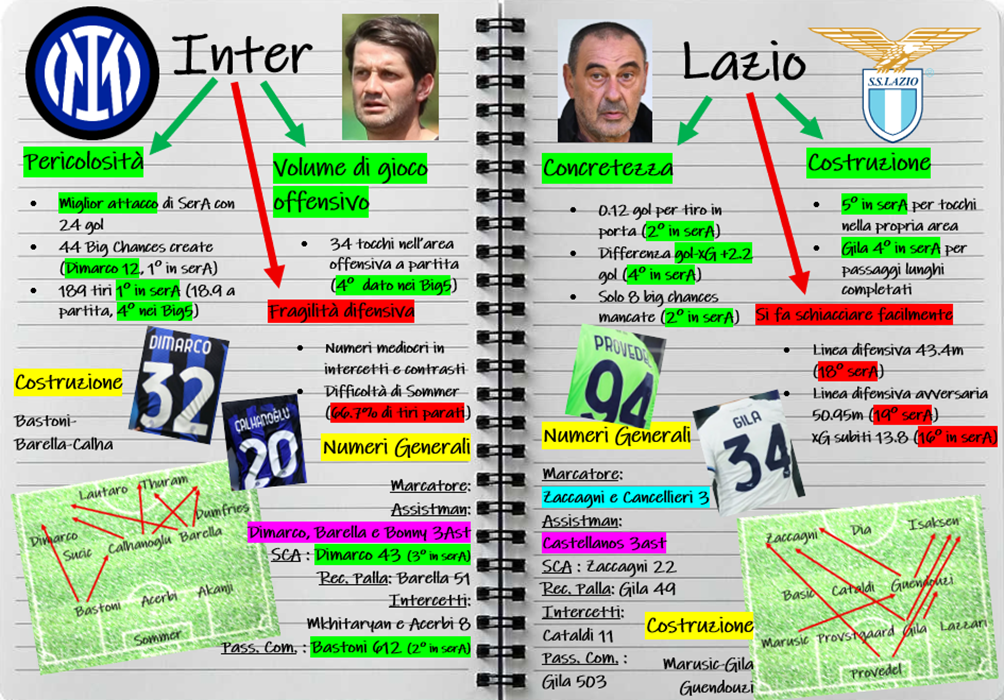
Inter overflowing in attack – If Inter sit second in the table, they owe it less to defensive solidity and more to their outstanding attacking production. Statistically, the Nerazzurri are far ahead of the rest of Serie A — their numbers are eye-catching and place Chivu’s team among the most dangerous sides in Europe. The basics: Inter boast the league’s best attack with 24 goals scored, ranking fifth among Europe’s top five leagues for goals per game (top scorer: Calhanoglu, 5 goals).
Let’s dive into the data that define this explosive Inter side:
• 44 big chances created, the best in Serie A by far (Milan are second with 27); Dimarco has created 12 himself.
• 18.6 expected goals (xG) — again, comfortably ahead of Milan’s 15.7 in second place.
• 189 total shots — 18.9 per match, fourth-best among Europe’s top five leagues (Lautaro leads the team with 31).
In open play, Inter push almost every outfield player high into the attacking third, crowding the opponent’s box.
It’s not just about chance creation — it’s about volume and territory:
• Inter lead Serie A in touches inside the opposition box, averaging 34 per match, fifth across Europe’s top five leagues.
• They’re also first among the top five leagues for completed passes inside the opponent’s box — 13.2 per game.
Lazio: efficiency or luck? – Lazio’s season under Sarri got off to a shaky start but seems to be trending upward. The striking thing is how modest their attacking numbers are: 14th in Serie A for shots, 13th for xG, and second-to-last for big chances created. Yet:
• Lazio have scored 13 goals, the sixth-best attack in the league (top scorers: Zaccagni and Castellanos, 3 goals each).
• They score once every 0.12 shots, making them Serie A’s second-most clinical team.
• They’re also second for fewest big chances missed — just 8.
This efficiency comes from their ability to maximize certain player qualities, especially in buildup. Lazio’s possession stats are decent, though less dominant than in previous seasons under Sarri. This year, they build deep and rely on Gila, Guendouzi, and even Provedel to open up play with long vertical passes:
• Lazio rank fifth in Serie A for touches inside their own box.
• Gila is fourth among Serie A outfield players for completed long passes.
A more controversial stat concerns their defensive structure. Lazio concede a high number of chances — they’ve faced 50 shots on target, 16th in Serie A for xG conceded (13.8) — yet have allowed only 7 goals (a remarkable –6.8 differential, the best in Serie A). This stems partly from their very low defensive line (43.4 meters on average, 18th in the league) and from allowing opponents a high average defensive line (50.95m, 19th).
Inter’s buildup – In possession, Chivu’s side relies heavily on Bastoni, Calhanoglu, and Barella as key playmakers. With support from the Turkish midfielder, the two Italians quickly seek width through Dumfries and Dimarco, or a direct ball to Thuram. The main difference from the Inzaghi era lies in the constant drive to transition quickly and flood the final third with numbers. It’s no coincidence Inter lead all of Europe’s top leagues in crosses attempted (25.7 per game), with Dimarco the most prolific crosser across the big five leagues (82 total).
Lazio’s buildup – Lazio, as mentioned, prefer a slow buildup from deep before exploiting width and depth through the long-passing precision of Provedel, Gila, and Guendouzi. Their wingers don’t hit hard on the counter but excel at bringing multiple teammates into the box quickly, giving them options: cut inside and shoot, combine with overlapping full-backs or midfielders, or go to the byline for the cross.
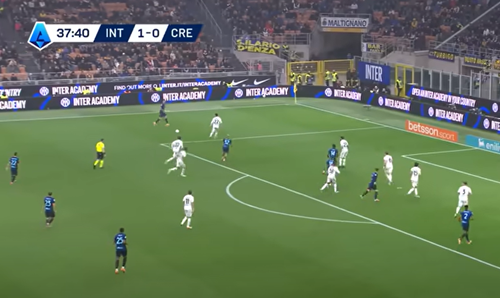
In a well-worked attacking move, Inter push virtually all their outfield players up around the opponent’s box.
But it’s not just their danger metrics that impress — it’s the sheer offensive volume they produce:
• Inter lead Serie A for touches inside the opposition area, averaging 34 per match, ranking fifth across Europe’s top five leagues.
• They are also first among the top five leagues for completed passes inside the opposition box, averaging 13.2 per game.
Lazio: efficiency or luck? – Sarri’s Lazio didn’t start the season well but now seem to be regaining form. What’s surprising, however, is how modest their attacking numbers are — 14th in Serie A for shots, 13th for xG created, and second-to-last for big chances. Yet somehow:
• Sarri’s men have scored 13 goals, the sixth-best attack in Serie A (top scorers: Zaccagni and Castellanos, 3 goals each).
• They score once every 0.12 shots, making them Serie A’s second-most clinical side.
• They’re also second for fewest big chances missed — just 8.
This remarkable efficiency stems from how Lazio exploit their players’ specific technical traits, particularly in buildup. The Biancocelesti maintain decent possession figures, though not the dominant ones typical of Sarri’s previous teams. This season, they prefer deep possession phases, using the long-passing ability of Gila, Guendouzi, and even goalkeeper Provedel to play vertically and spread the play wide:
• Lazio rank fifth in Serie A for touches inside their own penalty area.
• Gila ranks fourth among Serie A outfield players for completed long passes.
Defensively, Lazio’s numbers are puzzling. They allow a large number of chances yet concede few goals. They’ve faced 50 shots on target, rank 16th for xG against (13.8), but have conceded only 7 goals — a remarkable –6.8 differential, the best in Serie A. This can also be explained by their structural approach: Lazio hold one of the deepest defensive lines in Serie A (43.4m on average, 18th), while allowing opponents to maintain one of the highest defensive lines (50.95m, 19th) — unusual for a team of their quality.
Inter’s buildup – In possession, Inter rely heavily on Bastoni, Calhanoglu, and Barella, the core playmakers in Chivu’s system. Supported by the Turkish midfielder, the two Italians initiate play with short buildup sequences before quickly switching wide to Dumfries and Dimarco, or playing direct to Thuram. Compared to Inzaghi’s Inter, the key difference is the constant drive to transition quickly and push numbers forward, leveraging the attacking qualities of both wing-backs. It’s no surprise Inter lead Europe’s top five leagues in crosses per match (25.7), while Dimarco tops all major leagues with 82 crosses delivered so far.
Lazio’s buildup – Lazio, as mentioned, favor slow buildup from deep before seeking width and depth through the long-passing accuracy of Provedel, Gila, and Guendouzi. Their wingers are not primarily counterattackers — instead, they exploit the team’s ability to flood the box quickly. From there, the wide player can decide whether to cut inside and shoot, combine with overlapping full-backs or midfielders, or hit the byline for a cross.
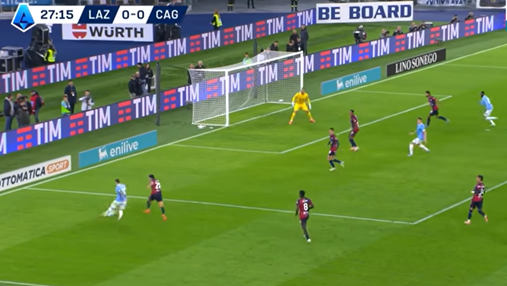
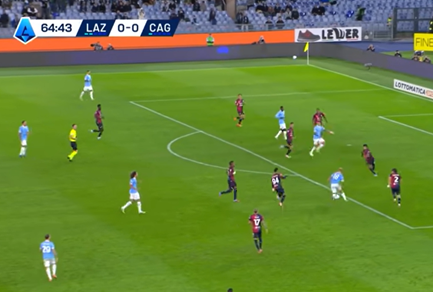
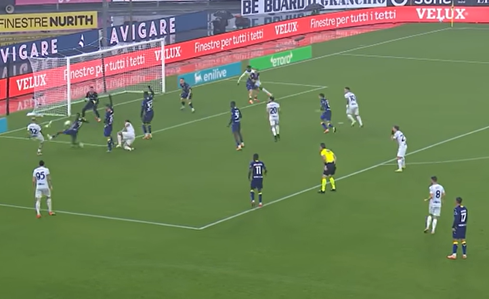
In the first image, we see Zaccagni driving to the byline before serving up Basic’s run — who then misses from close range. In the second, Isaksen opts instead to cut inside and shoot, giving Lazio the lead.
Out of possession – When defending, Lazio allow their opponents to advance and approach the final third before stepping in aggressively to close passing lanes and regain possession. The Biancocelesti rank third in Serie A for interceptions. Inter, by contrast, rely more on possession dominance and an aggressive initial press which, once bypassed, tends to give opponents space to play. Consequently, Chivu’s side posts solid ball recovery numbers (with Barella leading the team in this metric) but low figures in interceptions and tackles.
Goalkeepers – As discussed in recent weeks, Sommer’s season has been far from stellar. His save percentage remains a mediocre 66.7%, while Provedel has steadily emerged as Serie A’s top-performing goalkeeper. The Lazio shot-stopper recently overtook his “fellow Roman” Svilar with an impressive 86% save rate, the best in the league. Even more telling, though, is his goals prevented stat: +6.1, meaning Provedel has directly saved Lazio roughly six goals this season — explaining how Sarri’s side can concede so many shots yet so few goals. Sommer, on the other hand, stands at –2.7, indicating he has actually underperformed relative to expected saves, costing Inter goals.
Conclusions – In short, Inter continue to thrive with their highly offensive approach — a philosophy that has brought both spectacular wins and a few too many setbacks. Chivu appears committed to this attack-minded model, in line with Europe’s top clubs. Lazio, meanwhile, remain a paradox: creating little but scoring plenty, conceding a lot yet rarely punished. To put it plainly, in only one of their ten Serie A matches (Lazio–Verona 4–0) have they generated more xG than their opponent.
On paper and by the numbers, Inter are the clear favorites. If Chivu’s side perform to their attacking potential, even a red-hot Provedel might struggle to keep them out. Yet, Inter’s own defensive fragility could balance things out — giving Lazio more than a fighting chance.