From a coma to a three-year ban: the bitter rise and fall of an Italian Serie B talent
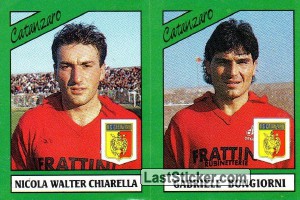
Among the most painful stories in Italian football is that of Walter Chiarella — a name that may not ring a bell for younger fans, but one that followers of Serie B in the 1980s remember well. A creative and prolific right winger, he was the kind of player capable of changing a match with a single flash of brilliance.
If we recently revisited the story of unfortunate players such as Maurizio Negri, Chiarella’s case may be the most emblematic of them all.
Catanzaro’s Golden Boy
With Catanzaro, Chiarella became a fan favorite. Between the 1986–87 season and the start of 1988–89, the attacking winger consistently delivered: five or six goals per season, plenty of assists, and steady performances. He was often compared in style to Bruno Conti — quick, imaginative, fearless out wide.
His displays did not go unnoticed. At a time when Serie A was widely regarded as the strongest league in the world, several top-flight clubs began monitoring him closely. A move to Italy’s elite seemed only a matter of time.
Then came the date that changed everything: February 24, 1988.
The Crash and the Abandonment
On that day, Chiarella was involved in a devastating car accident. He suffered severe chest trauma, a cerebral hemorrhage, and fell into a coma. It was a fight for his life.
The sporting consequences were equally brutal. Within days, Catanzaro terminated his contract after the Italian Olympic Committee (CONI) ruled him unfit for competitive activity. Chiarella suddenly found himself battling not only for survival, but also against professional oblivion.
Yet he refused to give up. For 798 days he worked tirelessly to recover, determined to return to the pitch.
A Second Chance with Ternana
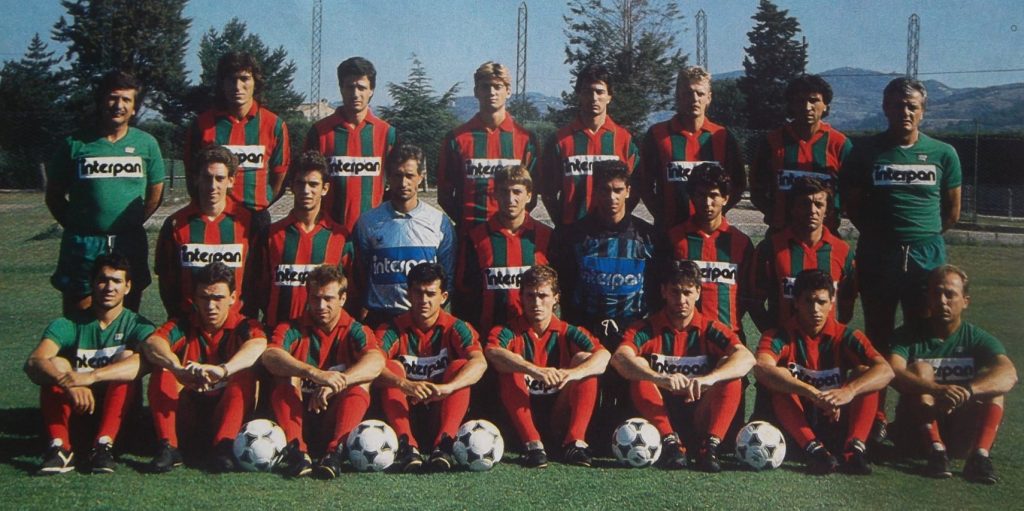
That opportunity came from Ternana. Once cleared again by CONI, Chiarella stepped back onto the field. And remarkably, he performed well. He scored, played with confidence, and showed flashes of the winger he had once been.
But fate had not finished with him.
Ahead of a match against his former club Catanzaro — now led by president Albano — Chiarella received a suspicious phone call suggesting the game be “adjusted.” Similar calls reportedly reached two of his teammates, also former Catanzaro players, Gori and Caramelli.
At the time, such calls were not unheard of in Italian football. Chiarella, however, chose to inform a Ternana executive about what had happened. The match ended 2–2 after a hard-fought contest in which he showed no sign of holding back.
Yet that phone call resurfaced during an investigation by the Italian FA’s inquiry office.
Trial and Suspension
Chiarella was placed under investigation. He was tried and ultimately handed a three-year suspension — a punishment that effectively derailed his career.
There was no proven match-fixing, nor any failure to report the approach to his club. Still, the sanction stood. In the first ruling, Chiarella received the ban while Catanzaro and president Albano were cleared.
On appeal, the three-year suspension was confirmed, but Catanzaro were docked three points — a penalty that proved decisive. A relegation playoff against Nola was canceled, and the Calabrian side were relegated instead.
For many Catanzaro supporters, Chiarella became associated with the alleged wrongdoing that contributed to the club’s decline. His name, once cheered, became linked to controversy.
A Cruel Ending
After serving his suspension, Chiarella returned to play in Serie C, but he was never the same. The winger once destined for Serie A had been worn down by hospital beds, courtrooms, and controversy.
His remains one of Italian football’s most striking cautionary tales: a player on the brink of top-flight recognition, struck down by tragedy, reborn through resilience, and ultimately undone by a judicial storm.
If that isn’t misfortune, what is?