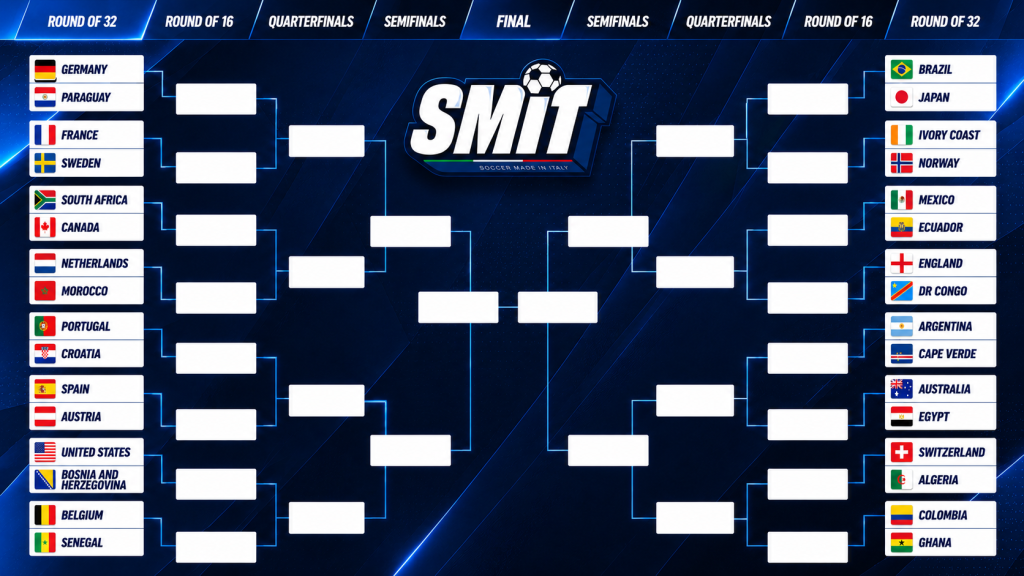
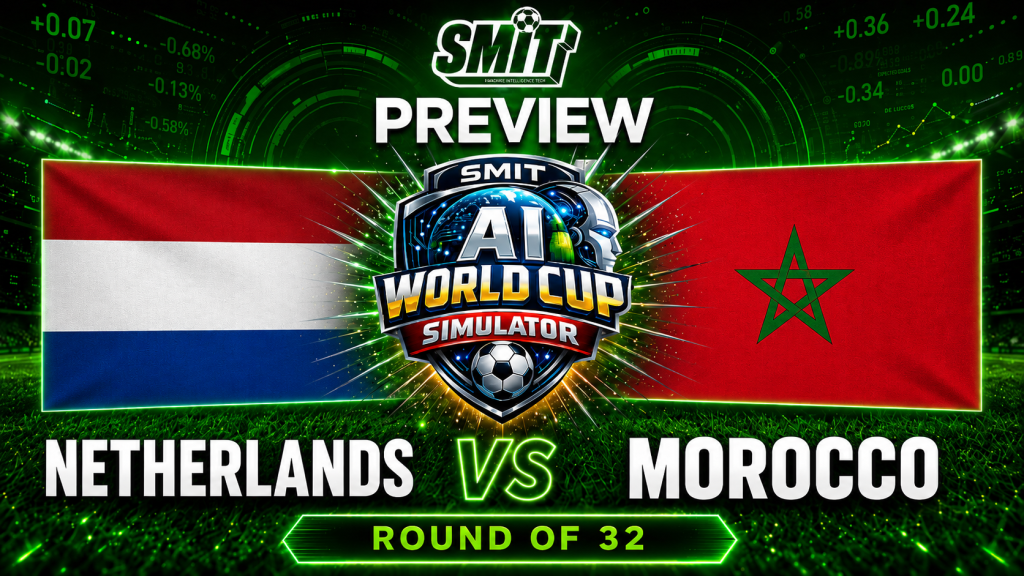
The Netherlands and Morocco meet in Monterrey in one of the most compelling matchups of the World Cup 2026 Round of 32. The Oranje arrive as group winners with one of the tournament’s most productive attacks. Morocco enter unbeaten, emotionally charged and still carrying the belief of a nation that made African football history in 2022. The winner moves on to face Canada in the Round of 16.
The Big Picture
Netherlands vs Morocco feels bigger than a standard Round of 32 game.
On the field, it is a matchup between two teams that both collected seven points in the group stage and looked capable of making a deep run. Off the field, it carries cultural weight because of the long football relationship between the two nations and the number of Moroccan players with strong Dutch connections.
The Netherlands entered the tournament with familiar expectations: elite talent, a deep defensive unit, a balanced midfield and the eternal question of whether this generation can finally deliver the World Cup trophy that has always escaped the Oranje. Ronald Koeman’s team responded well in the group stage. After a 2-2 draw with Japan, the Dutch exploded in a 5-1 win over Sweden and then beat Tunisia 3-1 to finish first in Group F.
Morocco’s route was just as impressive. The Atlas Lions opened with a strong 1-1 draw against Brazil, beat Scotland 1-0 and then showed attacking power in a 4-2 win over Haiti. After the historic semifinal run in Qatar 2022, Morocco no longer enters these matches as a romantic underdog. This is now a serious tournament team with structure, confidence and top-level individual quality.
The matchup also brings together two different knockout identities. The Netherlands want rhythm, wide isolation and attacking rotations. Morocco want compactness, vertical speed and moments from Brahim Díaz, Ismaël Saibari, Azzedine Ounahi and Achraf Hakimi.
This is a real test for both sides. The Netherlands have the stronger overall squad on paper, but Morocco have the tactical discipline and emotional edge to make the match dangerous from the opening whistle.
Recent Form
The Netherlands arrive in strong attacking form, but not without defensive questions.
In their three World Cup group-stage matches, the Oranje scored 10 goals and conceded four. That is a powerful attacking return, especially considering the quality of Group F. The 2-2 draw against Japan showed both the team’s creativity and its vulnerability in transition. The 5-1 win over Sweden was the statement performance, with the Dutch attack overwhelming a disciplined opponent through tempo, spacing and finishing. The 3-1 win over Tunisia confirmed the trend: this team can generate chances from multiple areas of the field.
Using the SMIT knockout-stage model — 70 percent weight on the three World Cup group-stage matches and 30 percent on the previous recent fixtures — the Netherlands receive one of the highest attacking-form scores in the Round of 32. Across the last five matches provided, they scored 12 goals and conceded six. The offensive production is elite. The defensive profile is less clean.
That matters against Morocco because the Atlas Lions are comfortable attacking space. If the Netherlands push too many players forward and lose the ball in central areas, Morocco can break quickly through Saibari, Brahim and Ounahi.
Morocco’s recent form is even more balanced.
The Atlas Lions are unbeaten in their last five listed matches, with three wins and two draws. In the group stage, they scored six goals and conceded three. The 1-1 draw against Brazil was the clearest signal that Morocco could compete with elite opponents. The 1-0 win over Scotland showed patience and defensive control. The 4-2 win over Haiti added a different layer, proving Morocco can also open up and win a higher-scoring match when needed.
Across the last five matches, Morocco scored 11 goals and conceded four. That balance is important. This is not only a defensive team. It is a team that can suffer without the ball, then turn a few attacking sequences into goals.
The key difference is rhythm. The Netherlands have been more explosive. Morocco have been more controlled. The simulator sees this as a tight match because both teams enter with confidence, but in different ways.
Tactical Keys
The Netherlands are expected to play in a 4-3-3, with Bart Verbruggen in goal, Denzel Dumfries and Micky van de Ven at fullback, and Virgil van Dijk alongside Jan Paul van Hecke in central defense.
The midfield of Frenkie de Jong, Tijjani Reijnders and Ryan Gravenberch is the engine of Koeman’s system. Frenkie gives control and press resistance. Reijnders provides forward running and final-third timing. Gravenberch adds physicality, ball progression and defensive coverage.
The front three of Donyell Malen, Brian Brobbey and Cody Gakpo gives the Netherlands several attacking routes. Brobbey can pin center backs and create space for runners. Gakpo can attack from the left and drift inside. Malen gives direct speed and sharp movement from the right.
The Dutch tactical challenge is rest defense. Morocco are too dangerous to allow easy counters. Dumfries and Van de Ven can provide width, but Koeman must make sure Frenkie, Gravenberch and the center backs are positioned to stop transitions before they become full-speed attacks.
Morocco’s likely 4-2-3-1 is built around compactness and fast vertical play.
Yassine Bounou remains the foundation in goal. Achraf Hakimi and Noussair Mazraoui give Morocco elite fullback quality, while Chadi Riad and Issa Diop are expected to form the center-back pairing. Ayyoub Bouaddi and Neil El Aynaoui should protect the middle, with Brahim Díaz, Azzedine Ounahi and Bilal El Khannouss supporting Ismaël Saibari.
Saibari is one of the major stories of Morocco’s tournament. His scoring form gives the Atlas Lions a flexible attacking reference: not a traditional No. 9, but a forward who can move, combine and attack the box at the right moments.
The tactical battle will likely come down to Morocco’s ability to block the central passing lanes while still releasing Hakimi and Brahim into space. If Morocco sit too deep, the Netherlands will build pressure. If Morocco open up too early, Gakpo, Malen and Brobbey can attack the box with numbers.
Team News
The Netherlands are expected to have Denzel Dumfries and Brian Brobbey available after earlier concerns over minor issues. Both are included in the supplied probable starting XI.
Koeman is projected to make one notable defensive adjustment, with Micky van de Ven starting at left back. That gives the Netherlands more recovery speed against Morocco’s transitions and more physical protection against direct balls into wide areas.
The probable Dutch XI has Verbruggen in goal; Dumfries, Van Dijk, Van Hecke and Van de Ven in defense; Reijnders, Frenkie de Jong and Gravenberch in midfield; and Malen, Brobbey and Gakpo in attack. Memphis Depay, Justin Kluivert, Crysencio Summerville and Wout Weghorst remain important attacking options from the bench.
Morocco are expected to return several key players to the starting lineup after rotation in the final group match. Hakimi, Mazraoui, Bouaddi and Ounahi are all projected starters.
The probable Morocco XI has Bounou in goal; Hakimi, Riad, Diop and Mazraoui in defense; Bouaddi and El Aynaoui in midfield; Brahim Díaz, Ounahi and El Khannouss behind Saibari.
No confirmed injuries or suspensions are listed in the material provided for either team.
Key Battles
Cody Gakpo vs Achraf Hakimi
This is one of the defining duels of the match. Gakpo’s ability to cut inside, combine and finish makes him one of the Netherlands’ most dangerous players. Hakimi’s speed, physicality and attacking instincts make him a threat in both directions. If Hakimi pins Gakpo back, Morocco gain a major tactical advantage. If Gakpo forces Hakimi to defend deep, the Netherlands can control the left side.
Frenkie de Jong vs Azzedine Ounahi
Frenkie is the player who gives the Netherlands rhythm. Ounahi is one of Morocco’s best players at disrupting rhythm and turning defensive phases into attacking ones. If Frenkie escapes pressure and dictates tempo, the Oranje can dominate possession. If Ounahi and Bouaddi force him sideways or backward, Morocco can slow the Dutch build-up.
Brian Brobbey vs Chadi Riad and Issa Diop
Brobbey’s physical presence is central to the Dutch attack. He can occupy center backs, create second-ball situations and open lanes for Gakpo and Malen. Riad and Diop must manage him without overcommitting. If Brobbey wins the central battle, Morocco’s defensive block will be pulled apart.
Ismaël Saibari vs Virgil van Dijk
Saibari has been Morocco’s most productive attacking figure in the tournament. He will not play as a fixed striker, which makes Van Dijk’s decisions more complicated. The Dutch captain must decide when to step forward and when to hold the line. If Saibari can pull defenders out of position, Morocco’s attacking midfielders can attack the spaces behind.
What’s at Stake
This Round of 32 match has major tournament consequences.
For the Netherlands, advancing is the minimum expectation. The Oranje have reached three World Cup finals without winning the trophy, and every strong Dutch generation carries that history. A defeat here would feel like another missed opportunity for a team with elite talent in defense, midfield and attack.
For Morocco, this is another chance to prove that 2022 was not a miracle. The Atlas Lions changed African football history in Qatar by reaching the semifinals. Now they are trying to turn that breakthrough into a sustained era of World Cup relevance.
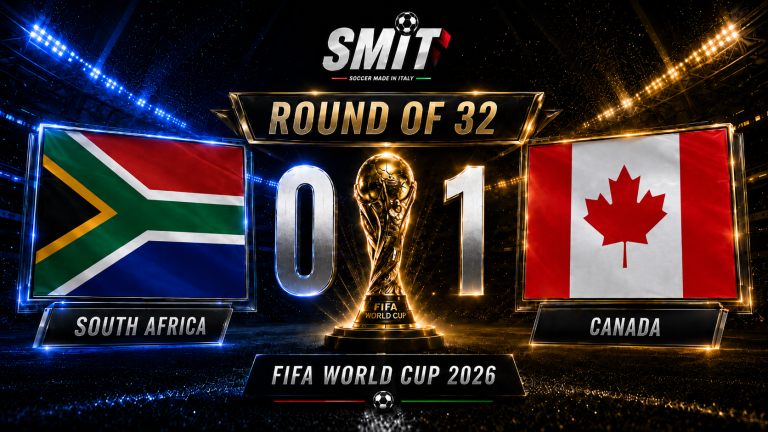
The winner will face Canada in the Round of 16. Canada advanced after a dramatic late win over South Africa, which means either the Netherlands or Morocco will enter the next round as the higher-profile team — but also with the pressure of expectation.
For Morocco, beating the Netherlands would reinforce their status as a true global contender. For the Netherlands, surviving Morocco would remove one of the most dangerous opponents from their side of the bracket and keep alive the dream of the missing trophy.
Probable Lineups
Netherlands Probable Lineup
Formation: 4-3-3
Bart Verbruggen; Denzel Dumfries, Virgil van Dijk, Jan Paul van Hecke, Micky van de Ven; Tijjani Reijnders, Frenkie de Jong, Ryan Gravenberch; Donyell Malen, Brian Brobbey, Cody Gakpo.
Morocco Probable Lineup
Formation: 4-2-3-1
Yassine Bounou; Achraf Hakimi, Chadi Riad, Issa Diop, Noussair Mazraoui; Ayyoub Bouaddi, Neil El Aynaoui; Brahim Díaz, Azzedine Ounahi, Bilal El Khannouss; Ismaël Saibari.
SMIT AI WORLD CUP SIMULATOR
Squad Strength Index
| Team | Goalkeeping | Defense | Midfield | Attack | Depth | Total |
|---|---|---|---|---|---|---|
| Netherlands | 8.2 | 8.8 | 8.7 | 8.4 | 8.5 | 85.2 |
| Morocco | 8.6 | 8.4 | 8.2 | 8.1 | 7.9 | 82.4 |
The Netherlands score higher overall because of their defensive depth, midfield control and attacking variety. Morocco score strongly in goalkeeping, fullback quality and tactical organization, with Yassine Bounou, Achraf Hakimi and their compact midfield structure keeping the gap close.
Expected Goals Simulation
| Team | Projected xG | Shot Quality Trend | Defensive Risk | Set-Piece Threat |
| Netherlands | 1.64 | High | Medium | Medium-high |
| Morocco | 1.32 | Medium-high | Medium | Medium |
The simulation projects the Netherlands to create slightly more volume, especially through wide attacks and second balls around Brobbey. Morocco’s xG remains dangerous because of transition play, Saibari’s movement and the ability of Brahim and Ounahi to attack space behind the Dutch midfield.
Win Probability
| Outcome | Probability |
| Netherlands win in 90 minutes | 43% |
| Draw after 90 minutes | 30% |
| Morocco win in 90 minutes | 27% |
| Netherlands advance overall | 56% |
| Morocco advance overall | 44% |
The simulator gives the Netherlands a narrow overall edge, but Morocco’s unbeaten form, defensive structure and big-game experience make this one of the most balanced Round of 32 simulations.
Four Most Likely Results
| Result | Probability |
| Netherlands 2-1 Morocco | 17% |
| Netherlands 1-1 Morocco, Netherlands advance after extra time | 14% |
| Netherlands 1-2 Morocco | 13% |
| Netherlands 2-2 Morocco, Morocco advance on penalties | 10% |
Most Likely Result
Netherlands 2-1 Morocco
The SMIT AI Simulator predicts the Netherlands to advance to the Round of 16 with a narrow 2-1 win after 90 minutes.
Predicted Goalscorers
Netherlands: Cody Gakpo, Brian Brobbey
Morocco: Ismaël Saibari
Player of the Simulation
Cody Gakpo, Netherlands
Gakpo is projected as the decisive player because of his current attacking rhythm, his ability to drift inside from the left and his finishing quality in high-pressure moments.
Confidence Level
Medium
The Netherlands have the stronger overall squad and more attacking variety, but Morocco’s unbeaten tournament, Bounou’s presence in goal and the Atlas Lions’ knockout identity make this a low-margin projection.
AI Match Simulation
The simulation begins with the Netherlands trying to take control through Frenkie de Jong and Gravenberch. Morocco sit in a compact 4-2-3-1, allowing the Dutch center backs to have the ball but protecting the central spaces around Ounahi, Bouaddi and El Aynaoui.
The first major Dutch threat comes from the left. Gakpo receives wide, cuts inside and forces Hakimi to defend deeper than Morocco would like. Brobbey attacks the box, creating space for Reijnders to arrive late. Bounou makes the first important save of the match, pushing away a low effort from the edge of the area.
Morocco respond through transition. Ounahi breaks pressure in midfield and releases Brahim Díaz into the right half-space. Brahim finds Saibari, whose quick movement between Van Dijk and Van Hecke forces Verbruggen into a sharp stop.
The Netherlands eventually break through late in the first half. Frenkie de Jong finds Reijnders between the lines, and the ball moves quickly toward Gakpo. The Liverpool forward cuts inside, creates a yard of space and finishes into the far corner. The Oranje lead 1-0, but the match remains far from settled.
Morocco come out stronger after halftime. Hakimi begins to push higher, Mazraoui becomes more aggressive on the opposite side, and Ounahi finds more room to carry the ball. The equalizer comes from Morocco’s best pattern: a quick vertical attack. Brahim slips a pass into Saibari, who times his run perfectly and finishes low to make it 1-1.
For 15 minutes, the match swings toward Morocco. The Atlas Lions grow in belief, the crowd becomes louder, and the Netherlands lose some control in midfield. Koeman responds by asking the fullbacks to be more selective and by pushing Gakpo closer to Brobbey in possession.
The decisive moment arrives in the final quarter of the match. Dumfries wins territory on the right, the Netherlands recycle the ball through Frenkie, and Malen delivers a low cross into the box. Brobbey uses his strength to get across the defender and finishes from close range.
Morocco push late, with El Khannouss and Ounahi trying to create one final chance, but Van Dijk leads the Dutch back line through the final minutes. According to the SMIT AI Simulator, the Netherlands survive a difficult, high-quality knockout test and advance with a 2-1 win.
Why the Simulator Predicts This Result
The simulation gives the Netherlands a narrow edge for four main reasons.
First, the Oranje have the stronger attacking production from the group stage. Ten goals in three matches show that Koeman’s team can generate chances in different ways: wide combinations, central rotations, second balls and striker play through Brobbey.
Second, the Netherlands have a slight midfield-control advantage. Frenkie de Jong, Reijnders and Gravenberch give the Dutch a blend of press resistance, athleticism and forward running. Morocco’s midfield is excellent, but the simulator projects the Netherlands to control longer stretches of possession.
Third, Morocco’s defensive structure keeps the match close. Bounou, Hakimi, Mazraoui, Riad and Diop give the Atlas Lions enough quality to resist pressure, while Ounahi and Brahim can turn defensive moments into dangerous counters. That is why the simulator gives Morocco a strong 44 percent overall advancement probability.
Fourth, the Netherlands have more late-game attacking options. Memphis Depay, Wout Weghorst, Justin Kluivert and Crysencio Summerville give Koeman different ways to change the match if Morocco slow the tempo or force extra pressure.
The SMIT AI Simulator does not project a comfortable Dutch win. Morocco are too disciplined, too confident and too dangerous in transition. But over 90 minutes, the Netherlands’ attacking variety, midfield control and set-piece threat create one more decisive moment.