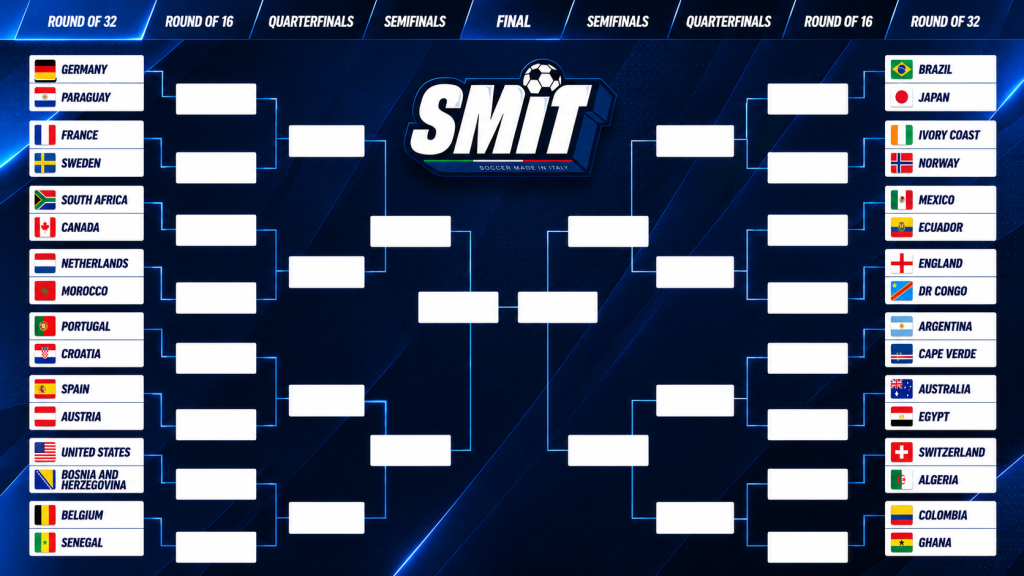
Germany and Paraguay meet in Boston in a Round of 32 matchup that carries two very different kinds of pressure. Germany are trying to prove that their World Cup reset is real after two straight group-stage failures in 2018 and 2022. Paraguay, back on the world stage after a 16-year absence, have already survived the first hurdle and now get a chance to drag one of Europe’s giants into a tense knockout fight.
The Big Picture
Germany arrive at the knockout stage as Group E winners, but not without questions.
Julian Nagelsmann’s team opened the tournament with a 7-1 statement win over Curaçao, followed it with a tougher 2-1 victory against Ivory Coast, then lost 2-1 to Ecuador in the group finale. The defeat did not prevent Germany from finishing first, but it changed the tone around the team. What looked like a smooth group-stage campaign suddenly became a reminder that the Mannschaft still has defensive lapses and tactical pressure points.
Germany remain one of the most talented teams in the tournament. Jamal Musiala and Florian Wirtz give Nagelsmann elite creativity between the lines, Kai Havertz offers flexibility as a center forward, Leroy Sané stretches the field, and the midfield has enough technical quality to dominate possession. But the knockout stage is different. Germany can no longer rely only on talent and attacking volume. They must manage transitions, protect leads and avoid giving Paraguay a reason to believe.
Paraguay’s path has been less explosive but very much in character. Gustavo Alfaro’s side recovered from a heavy 4-1 defeat against the United States by beating Türkiye 1-0 and grinding out a 0-0 draw against Australia. That was enough to qualify as one of the best third-place teams.
La Albirroja are not expected to dominate the ball. They are expected to suffer, defend, compete and wait for moments through Julio Enciso, Gabriel Ávalos and Miguel Almirón. Against Germany, that identity could make this match more uncomfortable than the gap in individual quality suggests.
Recent Form
Germany’s recent form is strong in production but imperfect in control.
Across the last five matches provided, Germany have four wins and one loss, with 16 goals scored and five conceded. That is elite attacking output, but the World Cup group-stage sample is more nuanced. Using the SMIT knockout-stage model — 70 percent weight on the three World Cup group matches and 30 percent on the previous listed fixtures — Germany’s attacking rating remains high because of the 7-1 win over Curaçao and the 2-1 victory against Ivory Coast. However, the 2-1 defeat to Ecuador lowers the defensive stability score and introduces a real risk factor.
The Mannschaft scored 10 goals in the group stage, with goals spread across multiple players. That matters. Germany do not need one single scorer to carry the attack. Wirtz, Musiala, Sané, Havertz and Undav all give Nagelsmann different ways to hurt opponents. Even if Paraguay shut down one channel, Germany can attack through another.
The concern is balance. Germany conceded in all three group matches. The Curaçao game was a blowout, but still not a clean sheet. Against Ivory Coast, Germany had to manage a difficult match. Against Ecuador, the defensive issues became more visible. In a knockout game, one transition conceded can completely change the match.
Paraguay’s form is harder to read.
In the last five matches provided, La Albirroja have two wins, one draw and two losses, with seven goals scored and six conceded. But the World Cup trend is more defensive than attacking. Paraguay scored only two goals in the group stage and conceded four, with three of those goals coming in the opening defeat to the United States. Since then, Alfaro’s team has produced two straight clean sheets: 1-0 against Türkiye and 0-0 against Australia.
That is the key trend. Paraguay improved defensively as the group stage went on. The team became more compact, more cautious and more willing to turn matches into low-event battles.
The problem is attacking ceiling. Paraguay have not shown enough consistent chance creation in the World Cup to suggest they can trade goals with Germany. Their best route is not an open game. It is a narrow, physical match that stays level deep into the second half.
Tactical Keys
Germany are expected to line up in a 4-2-3-1, with Manuel Neuer in goal and a back four of Joshua Kimmich, Antonio Rüdiger, Jonathan Tah and David Raum. Aleksandar Pavlović and Felix Nmecha should provide the double pivot, with Leroy Sané, Jamal Musiala and Florian Wirtz behind Kai Havertz.
The key for Germany is positional clarity in the final third. Musiala and Wirtz both want to operate in central creative spaces, and that can be devastating when the rotations are clean. But against a compact Paraguay block, Germany must avoid crowding the same zones. Sané’s width on the right and Raum’s left-sided overlaps will be essential to stretch the field.
Havertz’s movement will also matter. If he drops too often, Germany may lack presence in the box. If he stays too high, Paraguay’s center backs can defend more directly. The ideal version is the hybrid role: connecting play, pulling defenders out, then arriving in scoring positions.
Paraguay are projected in a 4-4-2, though Alfaro’s team may defend for long stretches in something closer to a 4-5-1 or compact mid-block. Orlando Gill is expected in goal, with Gustavo Velázquez, Fabián Balbuena, Juan José Cáceres and Júnior Alonso forming the back line. Andrés Cubas and Matías Galarza will be crucial in midfield, while Mauricio, Miguel Almirón, Julio Enciso and Gabriel Ávalos provide the main attacking outlets.
Paraguay’s defensive plan should be clear: deny Germany central space, force the ball wide, defend crosses aggressively and look for transition chances. Enciso’s ability to carry the ball and Almirón’s speed could become the main escape routes.
The tactical battle is about patience. Germany must move the ball quickly without becoming reckless. Paraguay must defend deeply without becoming passive.
Team News
Germany will be without Nico Schlotterbeck, who is out through injury. That makes Antonio Rüdiger’s role even more important in the center of defense. Rüdiger is expected to start alongside Jonathan Tah, giving Germany experience, physicality and recovery speed.
David Raum is projected at left back in the supplied lineup, while Joshua Kimmich is expected on the right. In midfield, Pavlović and Nmecha are listed as the likely double pivot, with Wirtz, Musiala and Sané behind Havertz.
Deniz Undav remains one of Germany’s most dangerous attacking options off the bench. His tournament impact has been significant, and if the match becomes stuck after halftime, he could be one of Nagelsmann’s first attacking changes.
Paraguay will be without Diego Gómez through suspension. That is a major absence because of his energy, ball-carrying and ability to connect midfield to attack. The supplied probable lineup has Andrés Cubas and Matías Galarza in central roles, with Miguel Almirón included and available.
Julio Enciso is expected to start in attack alongside Gabriel Ávalos. Paraguay do not need Enciso to dominate possession; they need him to make two or three decisive plays in transition.
Key Battles
Jamal Musiala vs Andrés Cubas
Musiala’s ability to receive between the lines and beat defenders in tight spaces is one of Germany’s biggest weapons. Cubas must stay disciplined, close passing lanes and prevent Musiala from turning toward goal. If Musiala starts receiving cleanly, Paraguay’s defensive block could collapse.
Florian Wirtz vs Matías Galarza
Wirtz is Germany’s rhythm player in the final third. His timing, passing and movement can unlock a compact defense. Galarza’s job will be to pressure him without leaving gaps behind. This duel could decide whether Germany’s possession becomes dangerous or sterile.
Julio Enciso vs Antonio Rüdiger
Enciso is Paraguay’s most explosive individual threat. He can shoot from distance, carry the ball under pressure and attack broken defensive shapes. Rüdiger must be aggressive but controlled. If he steps too high and misses, Paraguay can break into open space.
Kai Havertz vs Fabián Balbuena
Havertz will try to move between the center backs and midfield, making Paraguay decide whether to follow or hold shape. Balbuena must manage that movement while staying alert to late runs from Musiala and Wirtz. Germany’s best penalty-area moments may come from Havertz creating confusion rather than simply winning direct duels.
What’s at Stake
This is the Round of 32, but for Germany it carries the emotional weight of a national reset.
After two straight World Cup group-stage exits, simply advancing from the group was not enough. Germany are expected to win knockout matches. A loss to Paraguay would be viewed as another major failure and would restart the debate over the direction of the national team.
For Paraguay, the stakes are different. La Albirroja have already restored pride by returning to the World Cup and reaching the knockout phase. But beating Germany would transform this tournament into something historic. Paraguay’s best World Cup run remains the 2010 quarterfinal, and a victory in Boston would put Alfaro’s team one step closer to matching that legacy.
The winner will face the winner of France vs Sweden in the Round of 16. That means Germany could be heading toward a heavyweight European matchup, while Paraguay could earn a chance to challenge another major football power.
Probable Lineups
Germany Probable Lineup
Formation: 4-2-3-1
Manuel Neuer; Joshua Kimmich, Antonio Rüdiger, Jonathan Tah, David Raum; Aleksandar Pavlović, Felix Nmecha; Leroy Sané, Jamal Musiala, Florian Wirtz; Kai Havertz.
Paraguay Probable Lineup
Formation: 4-4-2
Orlando Gill; Gustavo Velázquez, Fabián Balbuena, Juan José Cáceres, Júnior Alonso; Mauricio, Andrés Cubas, Matías Galarza, Miguel Almirón; Julio Enciso, Gabriel Ávalos.
SMIT AI WORLD CUP SIMULATOR
Squad Strength Index
| Team | Goalkeeping | Defense | Midfield | Attack | Depth | Total |
|---|---|---|---|---|---|---|
| Germany | 8.7 | 8.4 | 8.8 | 8.9 | 8.6 | 86.8 |
| Paraguay | 7.4 | 7.6 | 7.1 | 7.2 | 7.0 | 72.6 |
Germany receives the higher overall score because of superior attacking variety, elite creative midfielders, stronger technical control and greater bench depth. Paraguay scores best in defensive resilience and competitive structure, but Diego Gómez’s suspension lowers the midfield rating and limits transition quality.
Expected Goals Simulation
| Team | Projected xG | Shot Quality Trend | Defensive Risk | Set-Piece Threat |
| Germany | 2.05 | High | Medium | Medium-high |
| Paraguay | 0.82 | Low-to-medium | High | Medium |
The simulation projects Germany to create the better chances through sustained possession, central combinations and wide overloads. Paraguay’s xG comes mostly from transitions, second balls and set-piece opportunities rather than extended attacking sequences.
Win Probability
| Outcome | Probability |
| Germany win in 90 minutes | 66% |
| Draw after 90 minutes | 22% |
| Paraguay win in 90 minutes | 12% |
| Germany advance overall | 79% |
| Paraguay advance overall | 21% |
Germany are clear favorites, but the draw-after-90 probability remains relevant because Paraguay’s two most recent World Cup matches were built on defensive control and low scoring. If Germany fail to score early, the match could become uncomfortable.
Four Most Likely Results
| Result | Probability |
| Germany 2-0 Paraguay | 20% |
| Germany 2-1 Paraguay | 17% |
| Germany 3-1 Paraguay | 14% |
| Germany 1-0 Paraguay | 12% |
Most Likely Result
Germany 2-0 Paraguay
The SMIT AI Simulator predicts Germany to advance to the Round of 16 with a controlled 2-0 win after 90 minutes.
Predicted Goalscorers
Germany: Jamal Musiala, Kai Havertz
Paraguay: None
Player of the Simulation
Jamal Musiala, Germany
Musiala is projected as the player most likely to break Paraguay’s defensive structure through dribbling, close control and movement between the midfield and defensive lines.
Confidence Level
Medium-high
Germany have the stronger squad, the better attacking data and more ways to win. Paraguay’s defensive improvement over the last two group matches prevents the confidence level from reaching “high,” but the simulator still sees Germany as a clear favorite.
AI Match Simulation
The simulation opens with Germany controlling the ball and Paraguay dropping into a compact defensive shape. Nagelsmann’s team builds patiently through Pavlović and Nmecha, while Musiala and Wirtz drift into the half-spaces looking for pockets behind Cubas and Galarza.
Paraguay’s first objective is survival. Alfaro’s side keeps the back line narrow, asks the wide midfielders to track Germany’s fullbacks and tries to force the Mannschaft into crosses from deeper areas. For the first 20 minutes, that plan works. Germany have territory but not many clean looks.
The first breakthrough comes from central movement. Wirtz receives between the lines and combines quickly with Havertz, drawing Balbuena out of position. Musiala attacks the space, receives inside the box and finishes low past Gill. Germany lead 1-0, and the match immediately becomes more difficult for Paraguay.
La Albirroja respond with their best spell of the first half. Enciso carries the ball through midfield and wins a free kick in a dangerous area. Almirón also finds space once in transition, forcing Rüdiger into a recovery challenge. But Germany’s defensive experience holds, and Neuer is not forced into a major save before halftime.
In the second half, Paraguay push slightly higher, but that creates the space Germany want. Sané begins to receive wider on the right, Raum pushes forward on the left, and Havertz starts finding more room between the center backs. Germany nearly double the lead through Wirtz, whose shot is blocked after a quick combination with Musiala.
The decisive goal arrives around the final quarter of the match. Germany recycle possession after a cleared corner, Kimmich delivers a precise ball back into the area, and Havertz times his movement to finish from close range. At 2-0, Paraguay are forced to abandon some of their defensive caution.
Alfaro’s team makes a late push through Enciso and Ávalos, but Germany manage the final minutes professionally. Nagelsmann uses fresh legs from the bench to slow the game down, and the Mannschaft avoid the kind of transition chaos that Paraguay needed.
According to the SMIT AI Simulator, Germany advance with a 2-0 win — not a spectacular performance, but a mature knockout result built on patience, control and superior attacking quality.
Why the Simulator Predicts This Result
The simulation favors Germany for four main reasons.
First, Germany’s attacking volume is significantly stronger. Ten goals in the group stage and 16 goals across the last five listed matches show that Nagelsmann’s team can create from multiple zones and multiple players. Paraguay, by contrast, scored only two goals in the group stage.
Second, Germany have the midfield advantage. Musiala and Wirtz give the Mannschaft elite creativity between the lines, while Pavlović and Nmecha provide enough control to manage possession. Paraguay’s midfield loses important energy and progression without the suspended Diego Gómez.
Third, Paraguay’s defensive improvement is real but limited by game state. If the match stays 0-0 for an hour, La Albirroja’s chances rise. But if Germany score first, Paraguay must open up, and that gives Germany more space for Musiala, Wirtz, Sané and Havertz.
Fourth, Germany’s bench gives Nagelsmann better late-game options. Deniz Undav, Maximilian Beier, Leon Goretzka and other alternatives can change the rhythm if the match becomes stuck. Paraguay’s path is narrower and depends heavily on Enciso producing a decisive moment.
The SMIT AI Simulator projects Germany to win because the matchup favors their attacking variety, possession control and knockout experience. Paraguay can make the game physical and uncomfortable, but Germany have enough quality to break through and manage the result.