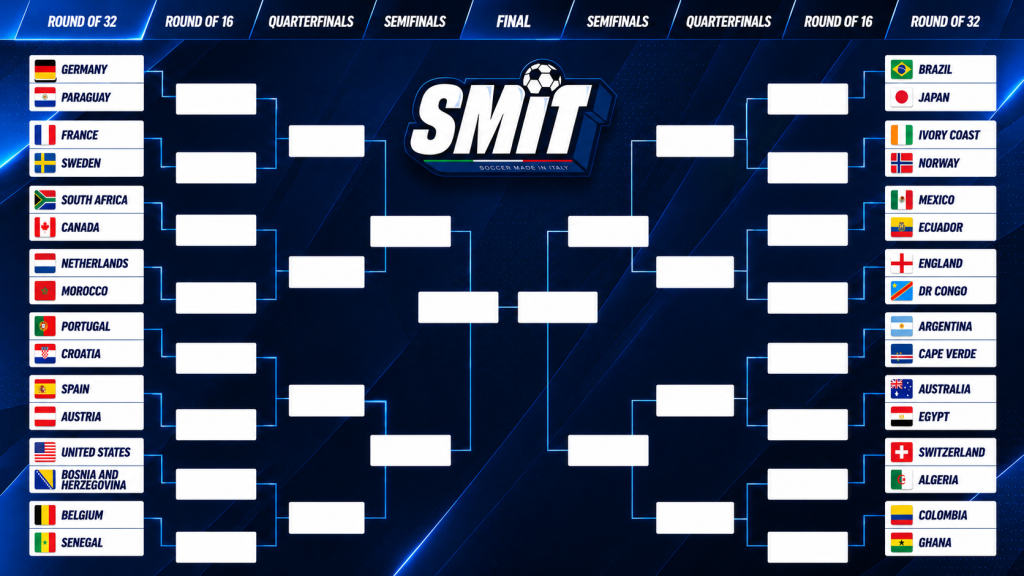

Brazil and Japan meet in Houston in one of the most intriguing matchups of the World Cup 2026 Round of 32. The Seleção arrive as five-time world champions, group winners and one of the tournament’s most dangerous attacking teams. Japan enter unbeaten, fearless and determined to turn another strong World Cup run into the first quarterfinal appearance in the nation’s history.
The Big Picture
Brazil vs Japan is a clash between football royalty and one of the most disciplined rising powers in the international game.
For Brazil, the mission is always the same: win the World Cup. Carlo Ancelotti’s side entered the tournament under enormous pressure after a long title drought by Brazilian standards, but the group stage ended with a clear upward trend. After opening with a 1-1 draw against Morocco, the Seleção found rhythm, balance and end-product in consecutive 3-0 wins over Haiti and Scotland.
The win over Scotland was especially important. Vinícius Júnior delivered a statement performance, Matheus Cunha continued to look comfortable as the central forward, and Brazil finished the group with seven points and two straight clean sheets.
Japan’s story is different but just as compelling. The Blue Samurai came through a difficult Group F unbeaten, drawing 2-2 with the Netherlands, crushing Tunisia 4-0 and closing with a 1-1 draw against Sweden. Hajime Moriyasu’s team has reached the Round of 16 several times before, but the next step remains the obsession: Japan has never reached a World Cup quarterfinal.
This Round of 32 game is also loaded with psychological weight. Japan beat Brazil 3-2 in a friendly in October 2025, proving it can hurt the Seleção in transition and play without fear against elite opposition. Brazil still has the deeper squad and higher ceiling, but Japan has the structure, speed and confidence to make this uncomfortable.
Recent Form
Brazil’s form is one of the strongest in the tournament.
Using the SMIT knockout-stage model — 70 percent weight on the three World Cup group-stage matches and 30 percent on the previous recent fixtures — the Seleção profile as a team peaking at the right time. Brazil scored seven goals and conceded only one in the group stage. The 1-1 draw against Morocco was a controlled but imperfect opener. The 3-0 win over Haiti unlocked the attack. The 3-0 win over Scotland confirmed that Ancelotti’s structure is becoming more fluid.
Across the last five matches provided, Brazil has four wins and one draw, with 15 goals scored and four conceded. The broader sample includes a 6-2 win over Panama and a 2-1 win over Egypt, but the World Cup trend is more important: Brazil is now creating without losing defensive control.
The most important development is the balance between individual freedom and collective protection. Vinícius Júnior is in elite form, Matheus Cunha has given Brazil a mobile central reference, and Bruno Guimarães and Casemiro have helped stabilize the middle of the field. Brazil’s attack looks increasingly explosive, but the clean sheets against Haiti and Scotland are just as meaningful.
Japan’s form is also impressive, but more complicated.
The Blue Samurai are unbeaten in their last five listed matches, with three wins and two draws. In the group stage, they scored seven goals and conceded three. The 2-2 draw against the Netherlands showed Japan could trade punches with a European heavyweight. The 4-0 win over Tunisia showed finishing efficiency and ruthless transition play. The 1-1 draw against Sweden showed control and maturity, even if Japan could not close the group with a win.
Japan’s recent trend is clear: this is not just a defensive underdog. Moriyasu’s team can press, combine, counter and rotate attacking positions. Ayase Ueda’s form gives Japan a reliable penalty-box presence, while Daichi Kamada, Ritsu Doan and Keito Nakamura provide intelligent movement between the lines.
The concern is availability and physical load. Japan had one fewer rest day than Brazil and enters a knockout matchup against an opponent with superior depth. Over 90 minutes, Japan can compete. Over 120 minutes, Brazil’s bench could become a major factor.
Tactical Keys
Brazil’s 4-1-2-3 gives Ancelotti a strong base for control.
With Alisson Becker in goal, Gabriel and Marquinhos anchoring the center of defense, and Danilo and Douglas Santos as fullbacks, Brazil has experience and composure in the first line. Casemiro is expected to sit as the single pivot, giving Lucas Paquetá and Bruno Guimarães freedom to connect midfield to attack.
The front three is where Brazil can break the game open. Vinícius Júnior will be the main threat from the left, Matheus Cunha will move across the center-forward zone, and Rayan is projected to start on the right in Raphinha’s absence. The key will be spacing. Brazil cannot become too narrow or too dependent on Vinícius. Japan’s back three and midfield line are disciplined enough to overload one side and force Brazil into slower circulation.
Japan’s 3-4-2-1 is built to absorb pressure and attack space.
Moriyasu’s expected shape gives Japan three central defenders, two wide outlets and two creative players underneath Ueda. Takehiro Tomiyasu, Ko Itakura and Hiroki Ito are projected to form the back three, with Yukinari Sugawara and Daizen Maeda providing width and running power. Ao Tanaka and Daichi Kamada are expected to play important roles in connecting the defensive block to the attacking line.
Japan’s best tactical route is vertical. If Brazil’s fullbacks push high and Paquetá or Bruno Guimarães lose the ball in advanced areas, Japan can break quickly through Doan, Nakamura, Kamada and Ueda. The Blue Samurai will not need long spells of possession to create danger.
The central tactical question is whether Brazil can control rest defense. The Seleção should have more of the ball and more territory, but Japan’s transition game can punish even brief lapses.
Team News
Brazil’s projected lineup follows the supplied probable formation and official roster list.
Ancelotti is expected to start Alisson Becker in goal, with Gabriel, Marquinhos, Danilo and Douglas Santos in defense. Casemiro should anchor midfield, with Lucas Paquetá and Bruno Guimarães operating ahead of him.
In attack, Raphinha is listed as unavailable, so Rayan is projected to start alongside Vinícius Júnior and Matheus Cunha. Neymar Jr. is part of the official roster and remains a potential high-impact option if Brazil needs experience and invention from the bench, but he is not projected in the starting XI.
For Japan, the supplied probable lineup points to Zion Suzuki in goal and a back three of Takehiro Tomiyasu, Ko Itakura and Hiroki Ito. The wing-back roles are expected to be filled by Yukinari Sugawara and Daizen Maeda, with Keito Nakamura, Daichi Kamada, Ritsu Doan and Ao Tanaka supporting Ayase Ueda.
Takefusa Kubo is listed as unavailable. That is a major blow because of his creativity, ball-carrying and ability to receive under pressure. Without him, Japan will need more final-third invention from Doan, Kamada and Nakamura.
Key Battles
Vinícius Júnior vs Takehiro Tomiyasu
This is the headline duel. Vinícius enters the knockout stage in elite form, and Brazil will look to isolate him as often as possible. Tomiyasu’s positioning, physicality and timing will be crucial. If Japan has to send constant help to that side, Brazil can create openings elsewhere.
Casemiro vs Daichi Kamada
Kamada’s movement between midfield and defense is one of Japan’s most dangerous weapons. Casemiro must track those pockets without being dragged too far from the central lane. If Kamada receives cleanly between the lines, Japan can turn defense into attack quickly.
Matheus Cunha vs Ko Itakura
Cunha’s mobility gives Brazil a different kind of center-forward profile. He can drop, combine and attack the box late. Itakura must decide when to follow and when to hold the line. One mistake in that duel could open space for Vinícius or Rayan.
Ritsu Doan vs Douglas Santos
Doan’s left-footed creativity and ability to cut inside can test Brazil’s defensive balance. Douglas Santos must manage the duel without leaving too much space behind him, especially when Japan transitions quickly into the channels.
What’s at Stake
This is a Round of 32 knockout match, but the pressure feels very different on each side.
For Brazil, anything short of reaching the later rounds would be viewed as a failure. The Seleção are chasing a sixth World Cup title and trying to end the country’s longest wait since the 2002 triumph. A win here would move Brazil into the Round of 16 and keep Ancelotti’s project on schedule.
For Japan, this is a chance to make history. The Blue Samurai have repeatedly reached the knockout stage, but the quarterfinal barrier remains unbroken. Beating Brazil in a World Cup elimination game would be one of the greatest results in Japanese football history.
The winner will face the winner of Ivory Coast vs Norway in the Round of 16. That makes this side of the bracket especially interesting: Brazil would see a winnable but dangerous route opening, while Japan would move one step away from a historic quarterfinal.
Probable Lineups
Brazil Probable Lineup
Formation: 4-1-2-3
Alisson Becker; Gabriel, Marquinhos, Danilo, Douglas Santos; Casemiro; Lucas Paquetá, Bruno Guimarães; Rayan, Vinícius Júnior, Matheus Cunha.
Japan Probable Lineup
Formation: 3-4-2-1
Zion Suzuki; Takehiro Tomiyasu, Ko Itakura, Hiroki Ito; Yukinari Sugawara, Keito Nakamura, Daichi Kamada, Daizen Maeda; Ritsu Doan, Ao Tanaka; Ayase Ueda.
SMIT AI WORLD CUP SIMULATOR
Squad Strength Index
| Team | Goalkeeping | Defense | Midfield | Attack | Depth | Total |
|---|---|---|---|---|---|---|
| Brazil | 9.1 | 8.7 | 8.8 | 9.2 | 8.9 | 89.4 |
| Japan | 8.0 | 8.3 | 8.5 | 8.0 | 8.1 | 81.8 |
Brazil receives the higher overall score because of elite goalkeeper quality, a world-class defensive core, greater attacking star power and superior bench options. Japan scores strongly in midfield structure, tactical discipline and defensive organization, but the absence of Kubo lowers its creative ceiling.
Expected Goals Simulation
| Team | Projected xG | Shot Quality Trend | Defensive Risk | Set-Piece Threat |
| Brazil | 1.86 | High | Low-to-medium | Medium |
| Japan | 1.12 | Medium | Medium-high | Medium |
The simulation projects Brazil to generate the higher-value chances, especially through Vinícius Júnior, Cunha’s movement and Paquetá’s connections between the lines. Japan’s xG remains competitive because of transition potential and Ueda’s penalty-box presence.
Win Probability
| Outcome | Probability |
| Brazil win in 90 minutes | 58% |
| Draw after 90 minutes | 25% |
| Japan win in 90 minutes | 17% |
| Brazil advance overall | 72% |
| Japan advance overall | 28% |
Brazil is favored, but Japan’s unbeaten group stage and tactical identity keep the upset probability meaningful. The simulation sees Japan as capable of forcing extra time if it can keep the first hour level.
Four Most Likely Results
| Result | Probability |
| Brazil 2-1 Japan | 19% |
| Brazil 1-0 Japan | 15% |
| Brazil 2-0 Japan | 13% |
| Brazil 1-1 Japan, Brazil advance after extra time | 11% |
Most Likely Result
Brazil 2-1 Japan
The SMIT AI Simulator predicts Brazil to advance to the Round of 16 with a narrow 2-1 win after 90 minutes.
Predicted Goalscorers
Brazil: Vinícius Júnior, Matheus Cunha
Japan: Ayase Ueda
Player of the Simulation
Vinícius Júnior, Brazil
Vinícius is projected as the decisive player because of his current form, his matchup advantage in wide isolation and his ability to create shots even when Brazil’s possession becomes static.
Confidence Level
Medium-high
Brazil has the stronger squad, better attacking ceiling and more complete knockout profile. Japan’s tactical discipline, unbeaten form and transition threat prevent the confidence level from reaching “high.”
AI Match Simulation
The simulation begins with Brazil controlling possession and Japan settling into a compact 3-4-2-1 block. Ancelotti’s side moves the ball patiently through Casemiro and Bruno Guimarães, trying to pull Japan’s midfield line out of shape. Japan stays disciplined early, with Tomiyasu stepping across to help against Vinícius Júnior and Kamada dropping into midfield to close central passing lanes.
Brazil’s first major chance comes from the left. Vinícius receives wide, accelerates past the first defender and cuts the ball back toward Matheus Cunha, whose shot forces Zion Suzuki into a sharp save. Japan responds in transition, with Doan carrying the ball into space and finding Ueda near the edge of the box, but Gabriel blocks the striker’s attempt before it reaches Alisson.
The opening goal arrives before halftime. Paquetá finds Vinícius in isolation, and the Real Madrid winger creates separation with one explosive touch before finishing low across the goalkeeper. Brazil lead 1-0, but the game remains dangerous because Japan continue to break with speed whenever the Seleção lose control in midfield.
Early in the second half, Japan find the equalizer. A turnover near midfield allows Kamada to connect quickly with Doan, who slips a pass into the right channel. Ueda attacks the space between Gabriel and Marquinhos and finishes clinically to make it 1-1.
The match then enters its most tense phase. Brazil push higher, but Japan’s back line holds. Ancelotti turns to his bench for more creativity and fresh legs, while Moriyasu’s team tries to slow the tempo and drag the game toward extra time.
The decisive moment comes in the final 20 minutes. Bruno Guimarães wins a second ball, Brazil recycle possession quickly, and Douglas Santos delivers from the left. Cunha’s movement pulls away from Itakura just enough to meet the cross and finish from close range.
Japan have one final push, with Maeda’s running and Nakamura’s delivery causing late pressure, but Brazil’s defensive experience holds. According to the SMIT AI Simulator, Brazil survives a serious test and advances with a 2-1 win.
Why the Simulator Predicts This Result
The simulation gives Brazil the edge for four main reasons.
First, Brazil’s World Cup trend is stronger. The Seleção have scored six goals and conceded none across their last two group-stage matches, showing clear improvement after the opening draw against Morocco. That matters more than older friendly results in the SMIT model.
Second, Brazil have more ways to win. Vinícius can decide the match individually, Cunha gives the attack movement and finishing, Paquetá and Bruno Guimarães can create from midfield, and Ancelotti has elite options on the bench if the match becomes stretched.
Third, Japan’s structure is excellent, but Kubo’s absence reduces its ability to hold possession under pressure and create in tight spaces. Without him, Japan remain dangerous in transition, but slightly less unpredictable in settled attacking phases.
Fourth, Brazil’s defensive base is built for knockout football. Alisson, Gabriel, Marquinhos, Danilo, Casemiro and Bruno Guimarães give the Seleção enough experience and control to manage difficult moments.
The SMIT AI Simulator does not project a comfortable Brazil win. Japan are too organized, too intelligent and too efficient in transition for that. But over 90 minutes, Brazil’s attacking ceiling and late-game depth produce the decisive difference.