Football lovers, today the sky is grey, the kind that often seems to foreshadow a bad day. In football, as in life, sometimes a tiny detail, an apparently trivial episode, is enough to change everything.
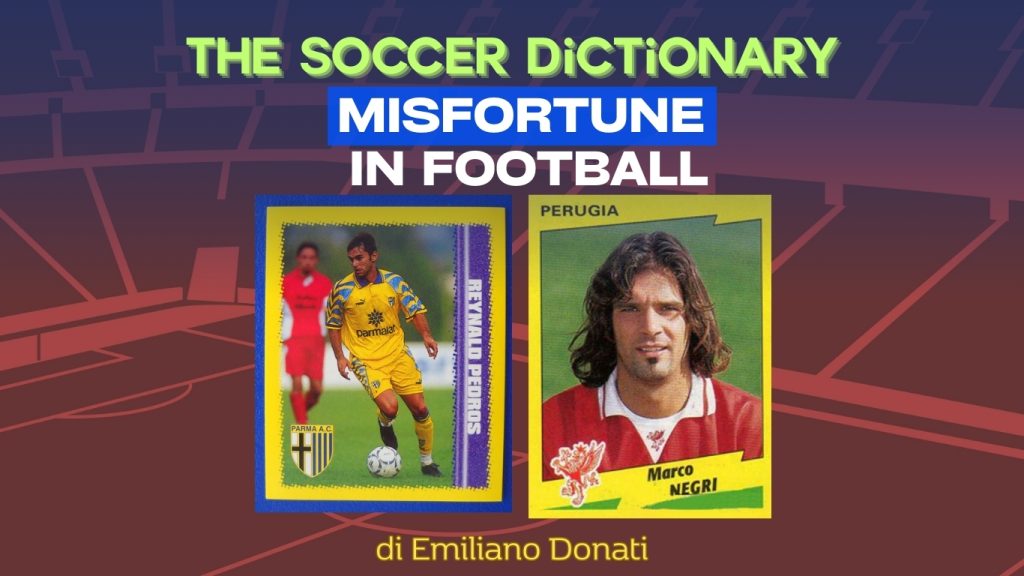
Luck can derail careers that seemed destined for glory. The stories of Reynald Pedros and Marco Negri prove it better than any theory ever could.
In the mid-1990s, Pedros was considered one of the purest talents in French football. Many placed him alongside Zinedine Zidane as the symbolic figure of a France preparing to host and dream of the 1998 World Cup.
He played for Nantes, a side on a strong upward trajectory, and he was an exceptionally elegant midfielder: outstanding technique, vision, goals. A modern, complete player, destined for the biggest stages. It was no coincidence that he was one of the stars called up for Euro 1996, with France among the tournament favorites.
The run came to a halt in the semifinals against a formidable Czech Republic. It was a brutal match: 0–0 after regulation time and extra time, everything decided on penalties.
Pedros was a regular penalty taker. He volunteered as the sixth shooter, hoping—as all sixth takers do—that it wouldn’t come to that. Instead, everyone scored.
Then it was his turn. His left foot was delicate, precise, but this time it betrayed him: he slipped on the turf, struck the ball poorly, sent it down the middle, and it was saved. Moments later, Kadlec scored and sent the Czech Republic into the final against Germany.
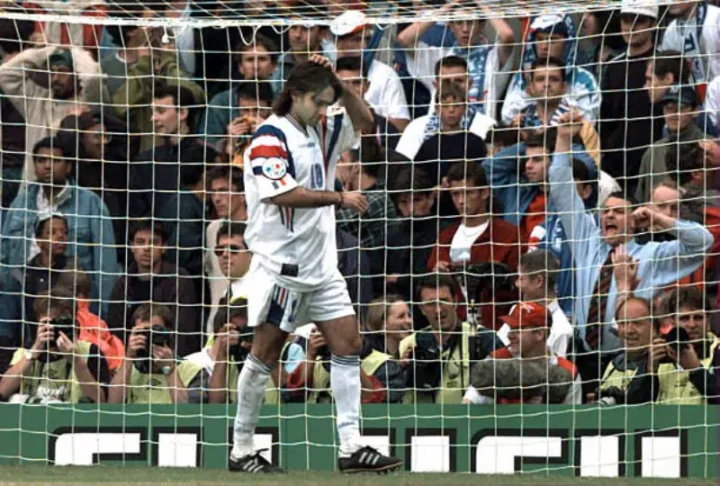
From that moment on, darkness fell for Pedros. His career, which until then had been on a steady rise, cracked irreparably. Back in France, he was whistled everywhere: by opposing fans, but also by his own.
He tried to restart at Marseille, but found a chaotic environment. He then decided to change countries and landed in Italy, the most fascinating league in the world at that time.
First Parma, without luck, then Napoli, on the brink of collapse. He played very little, suffered frequent injuries, and would later say that Italian training sessions were too demanding for his body.
He eventually tried a few experiences in Asia, but the truth is simple: his career broke that day, on that penalty spot.
Today he has found a new sense of balance coaching Marseille’s women’s team, but one question still lingers: what would Pedros have become if that penalty had gone in?
Even more unbelievable is the story of Marco Negri. For anyone who lived through football in the 1990s, Negri is an iconic figure: the unmistakable hair, the powerful build, the striker’s instinct.
He grew up in Udine in the shadow of Abel Balbo, from whom he learned all the secrets of the center-forward role. He moved around Italy and scored everywhere: Ternana, Bologna, Cosenza.
His breakthrough came at Perugia, under the fiery president Gaucci. Negri repaid the trust by finishing as Serie B’s top scorer and taking the Grifone back to Serie A.
In his debut season in the top flight, against defenses featuring names like Nesta, Cannavaro, Materazzi, and Aldair, he scored 15 goals. It wasn’t a fluke, not a flash in the pan. Yet Perugia were relegated.
Still, he attracted serious attention: Cesare Maldini called him up for a friendly ahead of the France ’98 World Cup, and Rangers signed him, envisioning him as the ideal striker to partner stars like Laudrup and, above all, Gascoigne. The squad also included Porrini and Amoruso: a small Italian colony in Scotland.
Negri started in sensational fashion. He did something no one had ever done in European leagues: 23 goals in 10 league matches, five in a single game against Dundee United.
He became the idol of Ibrox, the symbol of Rangers. Maldini followed him closely, protected him.
Then, one afternoon like any other, he went to play squash. A ball struck his right eye: complete retinal detachment. It was the end.
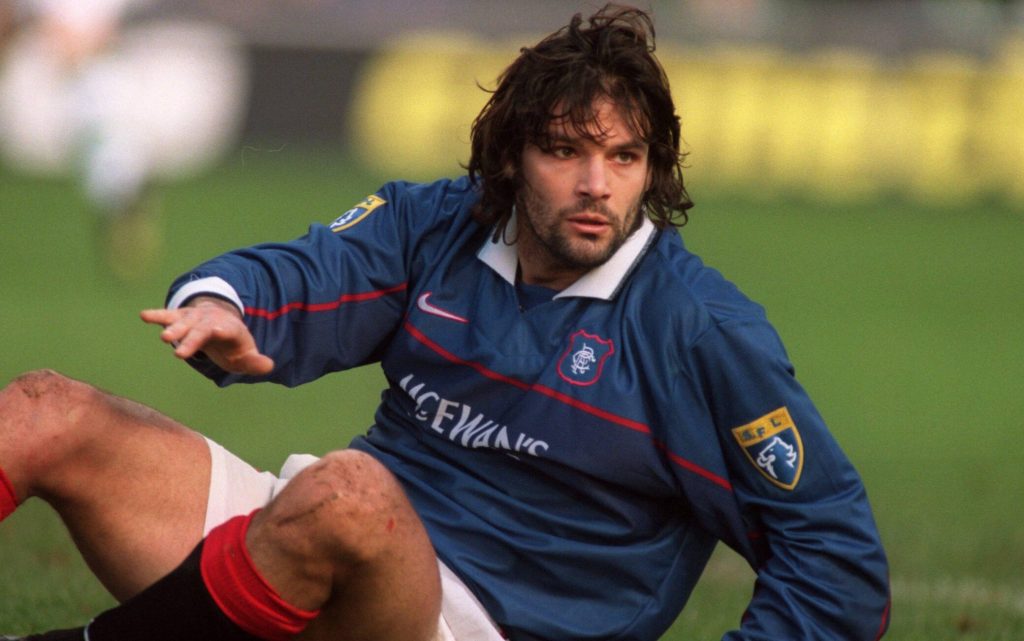
That accident marked his career irreversibly. Months away from the pitch, the team found a replacement, he fell out of the rotation. His relationship with the fans deteriorated, also because Negri, reserved by nature, struggled with media exposure.
He returned to Italy, between Vicenza and other Serie B clubs, but he would never again be the devastating player he once was.
Two different stories, bound by the same thin thread: a tiny detail that changes everything. A missed penalty, a squash ball.
It’s natural to wonder what might have happened if Pedros had scored, if Negri hadn’t booked that court that day, if Maldini had taken him to the 1998 World Cup, if that extraordinary season had carried him all the way to the Golden Boot.
The sky was grey back then, as in these stories. And grim was the weather that, for a moment, decided the fate of two careers.
Goodbye, football friends.
Italian Version:
La sfortuna nel calcio
Amanti del calcio, oggi il cielo è grigio, spesso sembra annunciare una giornata storta. Nel calcio, come nella vita, a volte basta un dettaglio minuscolo, un episodio apparentemente banale, per cambiare tutto.
La fortuna può deviare carriere che sembravano destinate alla gloria. Le storie di Reynald Pedros e di Marco Negri lo dimostrano meglio di qualsiasi teoria.
A metà degli anni Novanta Pedros è considerato uno dei talenti più puri del calcio francese. In molti lo affiancano a Zinedine Zidane come l’uomo simbolo della Francia che si prepara a ospitare e sognare il Mondiale del 1998.
Gioca nel Nantes, squadra in forte ascesa, ed è un centrocampista elegantissimo: tecnica sopraffina, visione di gioco, gol. Un giocatore moderno, completo, destinato a grandi palcoscenici. Non a caso è una delle stelle convocate per l’Europeo del 1996, con una Francia che parte tra le favorite.
Il cammino si ferma in semifinale, contro una Repubblica Ceca fortissima. È una partita durissima: 0-0 dopo i tempi regolamentari e supplementari, tutto si decide ai calci di rigore.
Pedros è uno che i rigori li tira, si propone come sesto, sperando – come tutti i sesti – che non ce ne sia bisogno. Invece segnano tutti.
Tocca a lui. Il suo mancino è delicato, preciso, ma questa volta tradisce: scivola sul terreno, colpisce male il pallone, che va centrale e viene parato. Subito dopo Kadlec segna e manda la Repubblica Ceca in finale contro la Germania.
Da quel momento, per Pedros, cala il buio. La sua carriera, fino ad allora in costante ascesa, si incrina irrimediabilmente. Tornato in Francia, viene fischiato ovunque: dai tifosi avversari, ma anche dai suoi.
Prova a ripartire dal Marsiglia, ma trova un ambiente caotico. Decide allora di cambiare paese e approda in Italia, nel campionato più affascinante del mondo di quegli anni.
Prima il Parma, senza fortuna, poi il Napoli, sull’orlo del precipizio. Gioca pochissimo, si infortuna spesso e arriverà a dire che gli allenamenti italiani erano troppo duri per il suo fisico.
Tenta infine qualche esperienza in Asia, ma la verità è una sola: la sua carriera si è spezzata quel giorno, su quel dischetto.
Oggi ha trovato una nuova serenità allenando il Marsiglia femminile, ma resta una domanda sospesa: cosa sarebbe stato di Pedros se quel rigore fosse entrato?
Ancora più incredibile è la storia di Marco Negri. Per chi ha vissuto il calcio degli anni Novanta, Negri è una figura iconica: la capigliatura inconfondibile, il fisico potente, il fiuto del gol.
Cresce a Udine all’ombra di Abel Balbo, da cui impara tutti i segreti del mestiere del centravanti. Gira l’Italia e segna ovunque: Ternana, Bologna, Cosenza.
La consacrazione arriva a Perugia, con il vulcanico presidente Gaucci. Negri ripaga la fiducia diventando capocannoniere di Serie B e riportando il Grifone in Serie A.
Da esordiente nella massima serie, contro difese che schierano nomi come Nesta, Cannavaro, Materazzi e Aldair, segna 15 gol. Non è un caso, non è un fuoco di paglia. Eppure il Perugia retrocede.
Lui, però, attira attenzioni importanti: Cesare Maldini lo convoca per un’amichevole in vista del Mondiale di Francia ’98 e i Rangers Glasgow lo acquistano, immaginandolo come la punta ideale da affiancare a campioni come Laudrup e soprattutto Gascoigne. In squadra ci sono anche Porrini e Amoruso: una piccola colonia italiana in Scozia.
Negri parte in modo clamoroso. Fa qualcosa che nessuno aveva mai fatto nei campionati europei: 23 gol in 10 partite di campionato, cinque in una sola gara contro il Dundee United.
Diventa l’idolo di Ibrox, il simbolo dei Rangers. Maldini lo segue, lo coccola.
Poi, un pomeriggio come tanti, va a giocare a squash. Una pallina lo colpisce all’occhio destro: distacco completo della retina. È la fine.
Quell’incidente segna la sua carriera in modo irreversibile. Mesi lontano dal campo, la squadra trova un sostituto, lui esce dalle rotazioni. Il rapporto con il pubblico si logora anche perché Negri, caratterialmente riservato, fatica a esporsi con le interviste.
Torna in Italia, tra Vicenza e altre squadre di Serie B, ma non sarà mai più il giocatore travolgente di prima.
Due storie diverse, unite dallo stesso filo sottile: un dettaglio minuscolo che cambia tutto. Un rigore sbagliato, una pallina da squash.
Viene naturale chiedersi cosa sarebbe successo se Petros avesse segnato, se Negri non avesse affittato quel campo quel giorno, se Maldini lo avesse portato al Mondiale del ’98, se quella stagione straordinaria lo avesse portato fino alla Scarpa d’Oro.
Il cielo era grigio allora, come in queste storie. E brutto è stato il tempo che, per un attimo, ha deciso il destino di due carriere.
Ciao amici del calcio.