What Do the Numbers Tell Us?
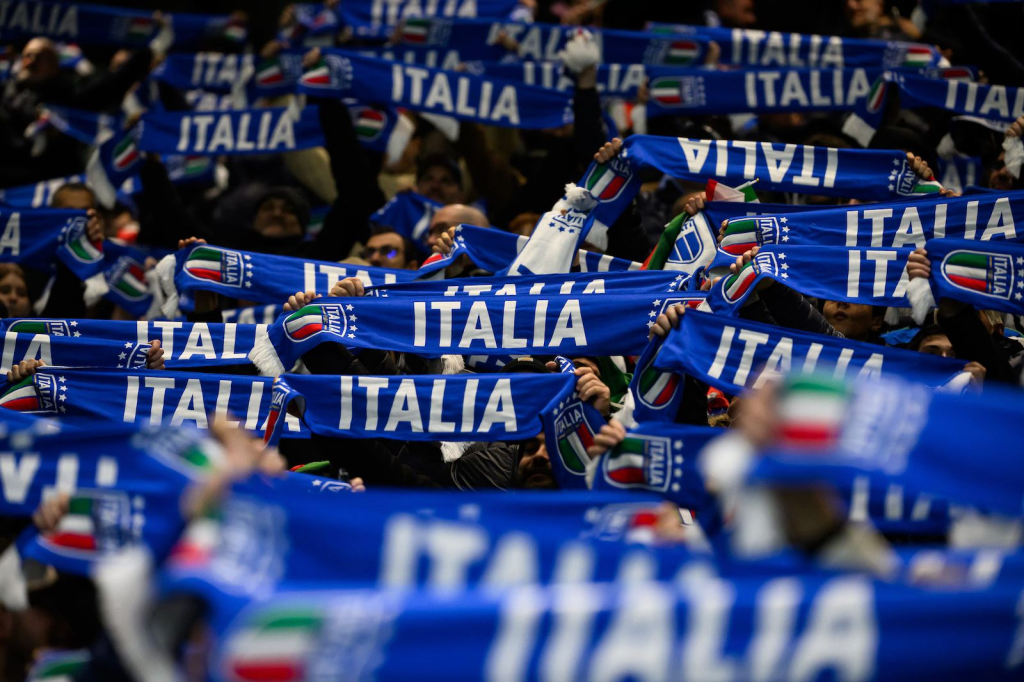
For the third consecutive time, Italy will not be going to the World Cup. For the third straight cycle, elimination has come in the playoff stage—which means, once again, Italy finished second in its qualifying group. Apologies for the repetition, but it highlights the first key stat: Italy has always come close. And as a modern saying goes, “close only counts in bocce”—or, given the recent Winter Olympics, in curling.
There are many ways to analyze this elimination, but two main perspectives stand out: a broader evaluation of the Italian soccer system that has led to a mediocre national team, and a strictly results-based analysis of what happened on the field. Here, we focus on the latter.
Is Italy good enough to be at the World Cup?
The answer is simple: yes, Italy is good enough.
Several metrics support the idea that the Azzurri had the quality to make it to the United States this summer:
- FIFA Ranking: Based on results from the past four years, Italy sits 12th even after elimination. This ranking still includes the missed 2022 World Cup but no longer factors in the Euro 2021 win. Being 12th means Italy is comfortably among the top 48 teams globally—and also among the top 16 in Europe (9th among UEFA nations).
- Squad Value: While more subjective, this metric is still useful. According to Transfermarkt, Italy ranks fifth in total squad value at €833.5 million—fifth both globally and among European teams. Yes, Italy’s squad is valued higher than Brazil and Argentina.
- Club Level of Players: Of Gennaro Gattuso’s call-ups, 23 players are registered with clubs ranked in the top 33 of the UEFA club rankings. Fourteen play for teams in the top 15. For comparison: France and Spain have 17, Germany 14 like Italy, England and the Netherlands 12, Brazil 11, and Argentina 10.
- Recent Results in International Competitions:
Looking at the last three European Championships and Nations League campaigns:- Euro 2024: Round of 16 (top 16, consistent with ranking)
- Euro 2021: Champions
- Euro 2016: Quarterfinals (top 8)
- Nations League 2025: Quarterfinals (top 8)
- Nations League 2023 & 2021: Third place
- Nations League 2019: Effectively 8th place
Across these seven tournaments, Italy has always been among the top 16 in Europe—and six times out of seven among the top eight.
So why has Italy missed three straight World Cups?
The data shows that Italy belongs among Europe’s top 16, but clearly struggles with World Cup qualification. Multiple factors are involved, including the format itself.
Historically, Italy is a team that rarely loses—but also draws more often than other top nations, even against weaker opponents. They rarely win in blowouts. This becomes a problem in group formats that reward first place only: one tough head-to-head matchup can cost you the group.
- 2018 Qualifiers: Italy faced Spain, drawing once and losing once, finishing second. Spain was clearly stronger—second place was expected.
- 2022 Qualifiers: Italy faced Switzerland and drew both matches (including two missed penalties by Jorginho). Additional draws against Bulgaria and Northern Ireland exposed offensive limitations.
- 2026 Qualifiers: Italy faced Norway—a rapidly improving team with a lower ranking but high squad value (11th globally). Italy lost the head-to-head but won all other matches. Norway scored 37 goals in 8 games (4.6 per game), highlighting their strength.
The real issue emerges in the playoffs, where Italy has struggled against less prestigious teams: Sweden, North Macedonia, and Bosnia. In those four matches combined, Italy scored just one goal.
Where did things go wrong?
The answer lies in the attack.
In recent years, Italy has consistently produced high-level players in goal, defense, full-back roles, and midfield—but rarely in attack. In the starting lineup against Bosnia, the only players not representing top-15 UEFA clubs were the forwards (from Fiorentina and Al Qadsiah).
Looking at forwards with the most caps since 2016: Immobile, Insigne, Belotti, Chiesa, Bernardeschi, Berardi, Kean, and Scamacca. Without criticizing their quality, only Bernardeschi has surpassed 30 Champions League appearances (31), and only Immobile and Insigne have scored more than five goals in the competition (13 and 12). In today’s game, those are fairly modest numbers.
Current qualifying stats confirm the issue:
- Italy averages 2.62 goals per game (12th among qualifying teams)
- 6.7 shots on target per game (10th)
But more than volume, the issue is quality—especially in dribbling:
- Italy ranks 45th in successful dribbles per game (5.2)
- Top teams: Belgium (12), France (10.8), Norway (10.1), Bosnia (9.7)
- Italy’s best performer is Riccardo Orsolini with 1.5 dribbles per game (39th overall—and he missed the playoffs).
Compare that to players like Bajraktarevic (2.9), Dedic (2.4), Nusa (4.5), Odegaard (2.8), or even Italy’s own Zalewski (2.7).
Interestingly, Italy does have good dribblers—but they are not attackers. The top Italian players in this metric at club level are Palestra, Kayode (top 10 in the Premier League for dribbles), and Spinazzola.
A lack of elite talent
Italy has many good players—more than many national teams—but lacks true stars.
- No Italian player is valued above €100 million.
- Only two exceed €50 million: Sandro Tonali (€80M) and Alessandro Bastoni (€70M)—a midfielder and a defender.
- There are 13 players valued between €30M and €50M, but only three are forwards: Retegui, Kean, and Esposito—and all are traditional strikers, not wingers or attacking midfielders.
Compare that to Norway:
- Erling Haaland (over €100M)
- Martin Ødegaard (€50M–€100M)
- Additional offensive talents like Nusa and Bobb
Champions League scoring tells the same story:
- In both the current and previous editions, no Italian scored more than 3 goals (Retegui and Scamacca).
- The last Italian to score 5+ in a single Champions League campaign was Ciro Immobile in 2020/21.
- To find an Italian exceeding that, you have to go back to 2002/03, when Filippo Inzaghi scored 10.
- Since 2003/04, over 150 players have scored 5+ goals in a single Champions League season—none of them Italian.
Conclusion
Italy had the quality to qualify for the World Cup—there’s no doubt about that. The failure lies partly in on-field performance and partly in a format that amplifies Italy’s offensive limitations.
This is a team that struggles to break down defensive opponents and win “easy” games—making it difficult to top qualifying groups. Ironically, in tournament formats (as seen in Euro 2021 and Nations League runs), where knockout games feature more open play, Italy performs better.
Ultimately, Italian soccer is producing fewer elite players—and especially fewer top-level attackers, wingers, and playmakers capable of deciding big matches.
There is a lot of work to be done. What exactly needs to change is beyond the scope of this article. But it’s clear that confidence in the system is low. Still, there are signs of movement at the grassroots level—and hope that one day, Italy will return to where it belongs.