
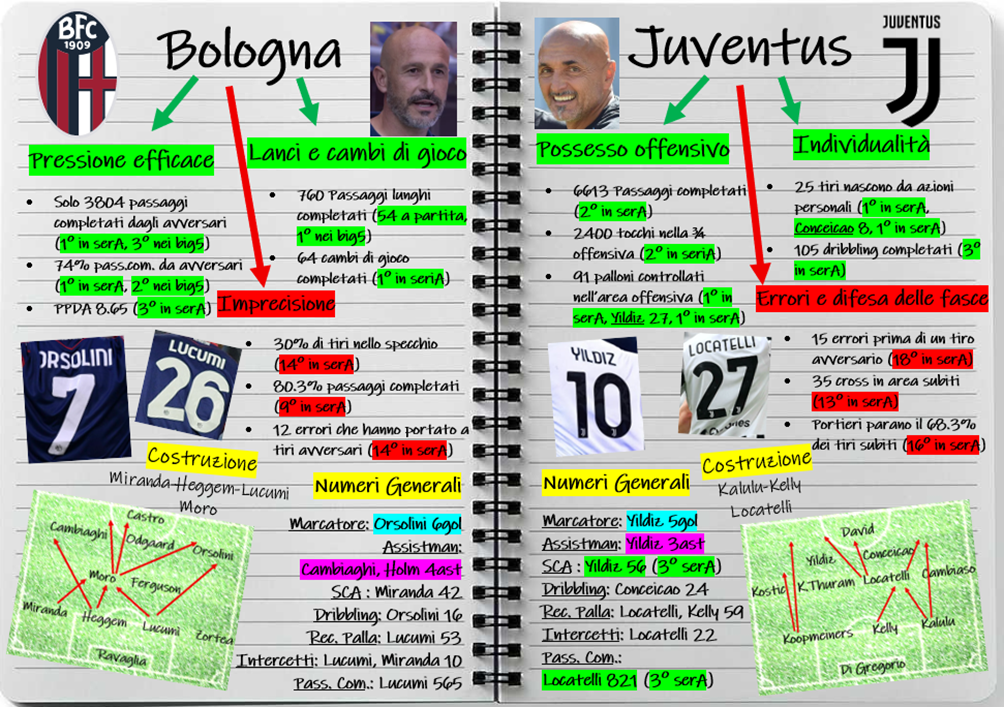
Chasing the Champions League train – On Matchday 15 of Serie A, the marquee fixture sees Italiano’s Bologna face Spalletti’s Juventus, fifth and seventh respectively. Both are aiming to close the gap to fourth place and can’t afford further slip-ups. Sunday night will mark the sixth head-to-head between the two coaches, with a perfectly balanced record so far: two wins each and one draw. After a year and a half in charge, Italiano has clearly stamped his aggressive identity on Bologna, while Spalletti—only just over a month into the job—has been reshaping Juventus around a possession-based model with precise movements attacking the box.
Bologna start by hunting the opponent – Italiano’s Bologna have a clearly defined trait that begins without the ball and carries through to attacking the penalty area: pressing the opponent to force errors, then attacking with numbers. The Rossoblù metrics underline how well-drilled the system is and how it translates into end product:
- Opponents have completed just 3,804 passes against Bologna, the lowest total in Serie A and the third-lowest across the big five leagues.
- Opponents complete only 74% of their passes, again the lowest in Serie A and second-lowest in the big five (Lucumí leads Bologna for recoveries and interceptions).
- Average consecutive passes allowed: 8.65, third-best in Serie A.
This intense pressure doesn’t produce huge possession volume, but it does generate big chances and goals:
- With 23 goals scored, Bologna boast the second-best attack in Serie A (Orsolini leads the Rossoblù with six goals and is third overall).
- 33 big chances created, fourth-best in Serie A.
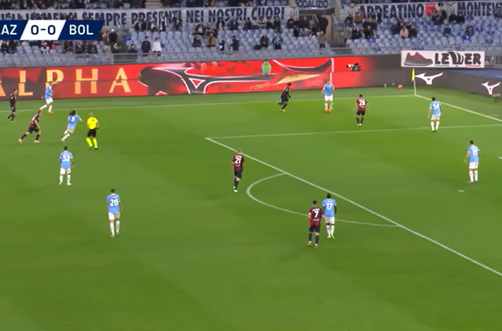
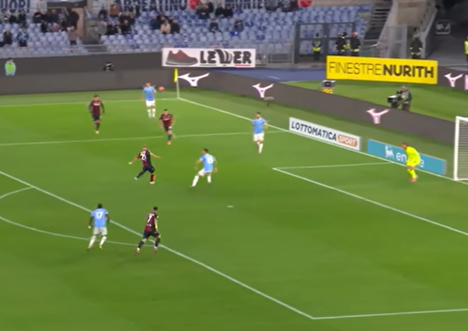
Bologna press every Lazio passing lane, force the error, and create a major chance for Odgaard.
Imprecision creeps in – Bologna force imprecision from opponents, but when they look to flip play quickly they can be wasteful themselves, sometimes paying the price by getting stretched and leaving defenders exposed 1v1:
- 30% of Bologna shots hit the target (14th in Serie A).
- 80.3% pass completion (9th).
- 12 errors leading to an opposition shot (14th).
- 39.9% success rate stopping opposition dribblers (20th).
Juventus push the build-up higher – Since Spalletti’s arrival, Juventus’ possession numbers have changed significantly. The Bianconeri have moved from a reactive, low-block approach with quick transitions to a model based on sustained possession—especially in advanced areas—and frequent runs into the box. Increased density in the final third and penalty area has boosted their threat and overall attacking output:
- 6,613 completed passes (2nd in Serie A; Locatelli with 821 is 3rd overall).
- 2,400 touches in the attacking third (2nd; Yıldız with 335 is 4th overall).
- 383 touches in the opposition box (2nd).
- 91 carries into the box (1st; Yıldız leads the league with 27).
- 72 shots on target (1st in Serie A).
Within this attacking volume, Juventus heavily leverage individual quality out wide, both from midfielders and forwards:
- 25 shots created from individual actions (1st in Serie A; Conceição has created 8, best in the league).
- 105 successful dribbles (3rd in Serie A).
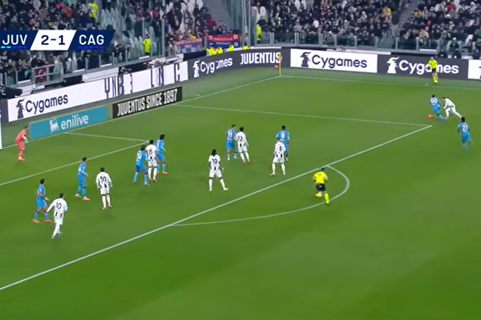
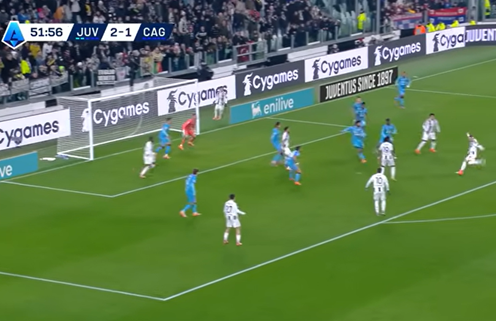
Conceição beats his man, reaches the byline, and pulls it back for Koopmeiners, who fires wide from a favorable position.
Wide defensive issues and poor finishing – Despite these strong numbers, even after Spalletti’s arrival Juventus have struggled for consistency due to errors and vulnerability on the flanks, compounded by subpar goalkeeping:
- 15 errors leading to an opposition shot (18th).
- 35 crosses conceded into the box (13th).
- 68.3% save rate (16th).
They also suffer from low conversion:
- 18 goals scored (7th-best attack).
- Only 22% of shots converted into goals (15th).
Bologna’s build-up – In possession, Bologna mainly build through the center-backs (Heggem and Lucumí) supported by Miranda and Moro. They favor limited short passing before pushing up quickly and seeking early vertical balls toward Cambiaghi and Orsolini. Italiano asks his side to progress fast, frequently using long balls and switches of play:
- 760 long passes completed, 54 per match—the highest figure across the big five leagues.
- 64 switches of play completed (most in Serie A).
In this approach, the Norwegian defender and the Croatian midfielder drive verticality, exploiting the movements of the wingers, Odgaard, and Castro to find the best passing lane and get to goal quickly.
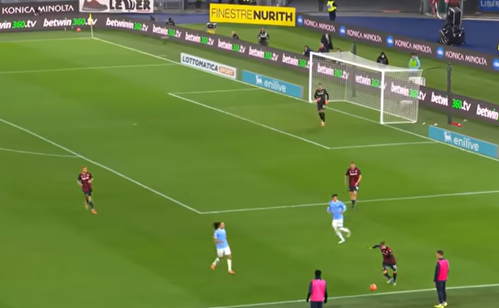
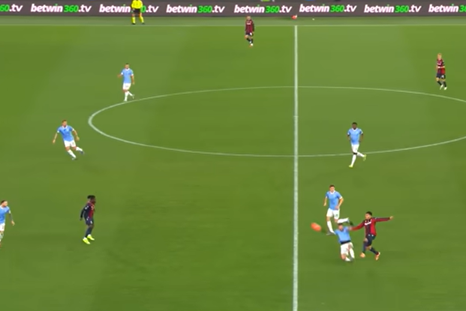
Bologna go vertical early for Castro, forcing a dangerous intervention and a second yellow card.
Juventus’ build-up – With Spalletti in charge, Locatelli’s importance has grown. The Italy international acts as the link for Kelly, who initiates Juventus’ build-up. The Kelly–Locatelli axis dictates when to go wide or play vertical; Kalulu and Koopmeiners support, often looking to release Kostić and Cambiaso on the run. Juventus’ possession has increased so sharply that, within weeks, Kelly and Locatelli have climbed the completed-passes rankings, now sitting third (Locatelli 821) and fourth (Kelly 819) in Serie A.
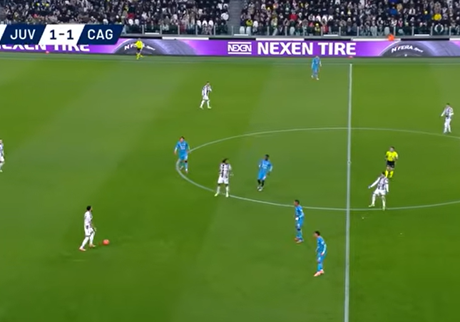
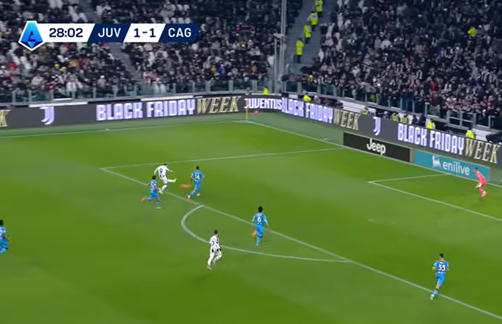
Kelly feeds Locatelli, who acts as the hub of the move and sets up a big chance for Vlahović.
Conclusions – Sunday night promises a chess match between two top coaches. Italiano will look to exploit Juventus’ build-up vulnerabilities, pressing to force errors and then targeting Cambiaghi and Orsolini out wide—areas where the Bianconeri suffer—to strike from the flanks. Spalletti will seek the best routes around Bologna’s pressure, exploiting the spaces the Rossoblù leave and their 1v1 issues to put Yıldız and Conceição in position to hurt them. As always in big matches, individual moments and set pieces—both meticulously prepared by these coaches—will play a role. In short: Bologna’s and Juventus’ Champions League chase will hinge on fine margins and tactical insights, with Sunday’s game set to be finely balanced.