Angelo Fabiani accuses an international agent of interfering in three Serie A transfer negotiations, prompting a formal investigation by Italian authorities.
Lazio have taken the extraordinary step of turning to the authorities over what the club describes as deliberate interference in recent transfer negotiations. Sporting director Angelo Fabiani has filed a formal complaint with Italian police, alleging that several of Lazio’s market operations were sabotaged through illicit pressure and defamatory tactics.
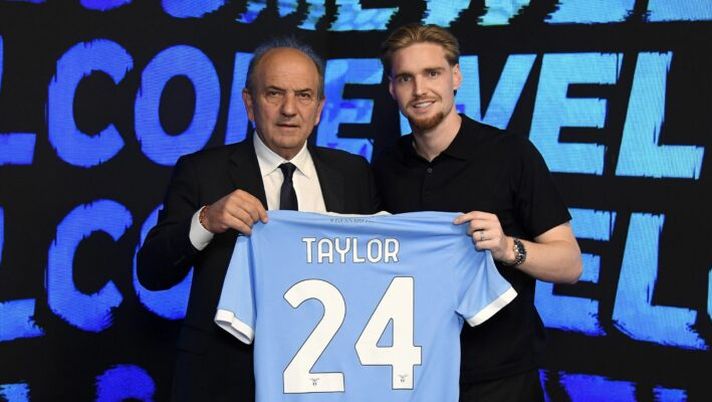
Fabiani had already hinted at the move during a press conference held last week to present new signings Ratkov and Taylor. True to his word, he appeared at the Carabinieri headquarters in Rome’s Trastevere district to lodge the complaint, which cites two alleged crimes: market manipulation and aggravated defamation.
According to the documents submitted, the investigation focuses on three specific transfer dealings. Lazio’s attempts to sign Ruben Loftus-Cheek from AC Milan and Lazar Samardzic from Atalanta ultimately collapsed, while the move for Ajax midfielder Taylor was successfully completed. Fabiani claims that the failures in the first two negotiations were not coincidental, but the result of external interference.
At the center of the case is an international agent, whose name Fabiani has already provided to investigators. The accusation is that the agent, despite having no official role in the deals, actively intervened to undermine Lazio’s negotiations by discrediting both the club and Fabiani personally.
As evidence, Lazio have submitted a series of messages allegedly sent by the agent to Guido Albers, the Dutch representative of Taylor. In those messages, the agent reportedly urged Albers to prevent his client from signing with Lazio, claiming that the same strategy had already been used successfully to block the transfers of Loftus-Cheek and Samardzic. Even more striking is a passage in which the agent allegedly justified his actions by saying they were requested by “two powerful people” whose identities remain unknown.
Despite the pressure, Taylor’s agent chose to proceed with Lazio, allowing the deal to go through. That decision now stands out as the exception in a broader pattern that investigators are seeking to clarify. Both the accused agent and Taylor’s representative are expected to be questioned to verify the authenticity of the messages and reconstruct the chain of events.
Fabiani has stressed that his decision to file the complaint was not only about protecting his own reputation, but also about safeguarding Lazio as a club. The issue takes on added weight given that Lazio are a publicly listed company, which is why prosecutors are also examining the potential implications for market manipulation.
The key question for investigators is whether this case revolves around a dispute within the agent ecosystem or something more serious: an organized attempt to distort Lazio’s transfer market activity. For now, Italian football is watching closely as the inquiry unfolds, aware that the outcome could have significant repercussions well beyond Formello.