Inter vs Milan – The third international break has just wrapped up and we’re heading into the longest uninterrupted stretch of the season, with at least one match per week through the end of March. This central phase of the campaign kicks off with the Milan Derby, featuring two title contenders. On one side, Chivu’s Inter, joint-top with Roma; on the other, Allegri’s Milan, two points back and level with Napoli. Their football philosophies differ sharply, even though their formations look very similar.
3-5-2 with pace up front – Both teams rely on a back three and a midfield built around a deep-lying playmaker and two box-to-box mezzali. In attack, the focus is on pace rather than size: Thuram and Lautaro are more natural strikers than their Rossoneri counterparts, Leao and Pulisic, who operate more like wingers or tucked-in attacking midfielders.
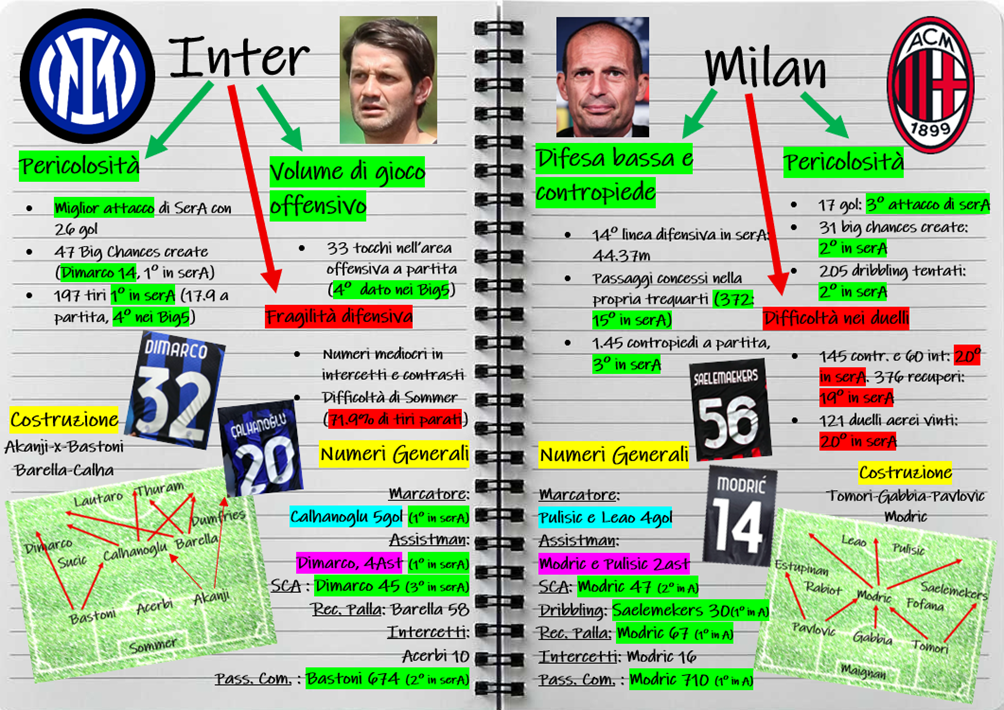
Inter’s ultra-offensive approach – Inter sit atop the table mainly thanks to their massive attacking output rather than their defensive numbers. The Nerazzurri are miles ahead of the rest of Serie A in these metrics, with figures that place Chivu’s side among Europe’s elite. Starting with the basics: Inter boast the best attack in Serie A with 26 goals scored, and the fifth-best among the top five leagues (top scorer: Calhanoglu with 5).
But here’s the full breakdown of Inter’s overwhelming attacking production:
• They’ve created 47 big chances — first in Serie A by a huge margin (Milan are second with 31). Dimarco has created 14, the highest tally in the league by far.
• They’ve generated 20.5 xG, again well ahead of the other Italian teams, with Milan second at 17.8.
• Their most dominant stat concerns shooting volume: Chivu’s men have taken 197 shots (Lautaro leads with 34) for an average of 17.9 per match, ranking fourth across the big five leagues.
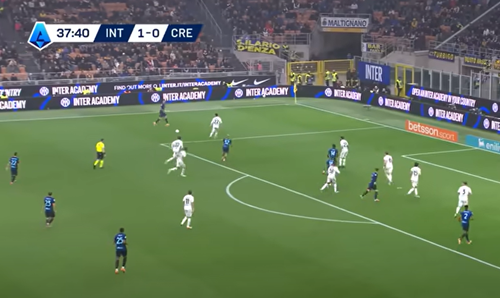
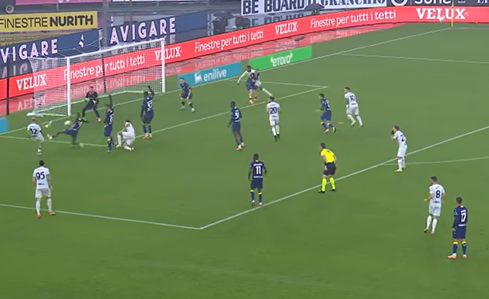
Inter’s possession play pushes virtually every outfield player to the edge of the opponent’s box.
But it’s not only their threat level that stands out — it’s the sheer volume of attacking play:
• Inter are the Serie A team with the most touches in the opposition box, averaging 33 per match, ranking fourth in the big five leagues.
• They rank first among the big five leagues for completed passes inside the opposition box with 13.3 per match (Bayern Munich are second at 12.7).
Milan wait it out – Milan’s numbers are well known by now. Their defensive density and positional setup are built around waiting rather than pressing. Allegri sits deep, even inside his own box if needed, and then flips the field quickly using the technical, athletic, and physical qualities of his wingers and forwards. All of this is done while minimizing risk and committing very few on-the-ball errors:
• With 9 goals conceded, Milan have the fourth-best defense in Serie A.
• Their defensive line sits at an average height of 44.37 meters — one of the lowest in Serie A (14th).
• They rank 15th for passes allowed to opponents in their own defensive third.
• They are the team that has conceded the most crosses into their box in Serie A.
• Their duel numbers are very low: last in interceptions, tackles, and aerial duels, and 19th in ball recoveries — even though Modric ranks first individually.
• Only 55 times has a Milan player lost the ball while carrying it — the best figure in Serie A by far (Inter are third at 73).
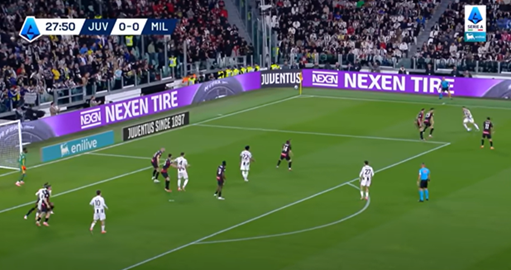
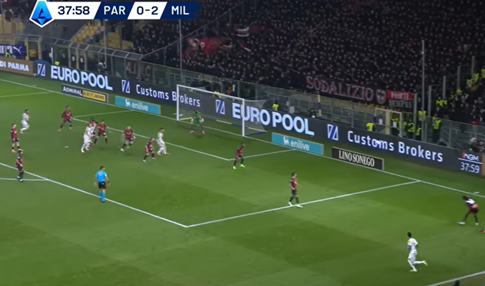
Milan often defend with 9 or even 10 players inside their own box.
They don’t press to trigger counters; they rely on drawing opponents deep into their box and then hitting them in transition:
• Milan allow opponents to build freely, as shown by their last-place ranking in opposition pass-completion percentage during buildup (87%, extremely high compared to other top clubs).
• The number of consecutive passes they concede per sequence is the highest in Serie A at 15.71.
• They sit deep to break, ranking third in Serie A for counterattacking moves — the best among the top clubs.
As a result, their overall attacking volume is limited, but their threat numbers remain among the league’s best:
• Milan rank seventh in shots on target and sixth in touches in the attacking third.
• Yet they have the league’s third-best attack with 17 goals (top scorers: Pulisic and Leao with 4).
• They are second in xG created (17.8, with Leao producing 3.2).
• They rank second for big chances created (31).
• They are also second for dribbles attempted (third for completed). Saelemaekers leads Serie A in completed dribbles (30).
Inter’s buildup – In possession, Inter rely heavily on their two wide center-backs, Bastoni and Akanji, to initiate play, followed by Calhanoglu and Barella, the two engines of Chivu’s offensive structure. Supported by the midfield, they quickly look to release the wing-backs Dumfries and Dimarco or play directly into Thuram after a brief defensive circulation. This is the clearest difference from Inzaghi’s approach: Chivu constantly aims to flip the field quickly and flood the attacking half, making the most of his elite wing-backs. Inter rank first in the big five leagues for crosses attempted (25.3 per match), with Dimarco leading all major leagues with 10.3 per match.
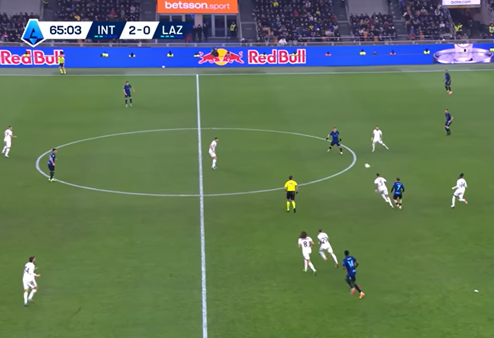
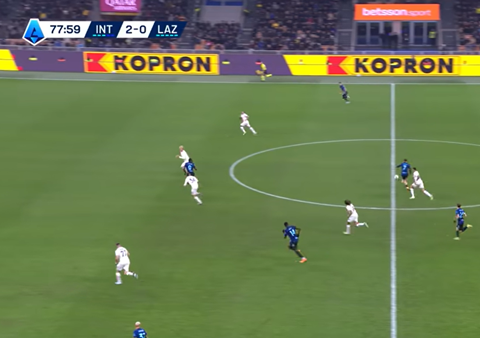
The Inter mezzala (Zielinski), as soon as he wins the ball back, immediately plays it out to the right wing-back (C. Augusto), who is already positioned high up the pitch.
Milan’s buildup – As noted recently, Modric is by far the player with the most completed passes in Serie A (710, with Bastoni second at 674). Milan’s play flows through him: the Croatian serves as a constant outlet for the three center-backs before finding the wingers or forwards. The former Real Madrid star often uses his ball-carrying to initiate transitions and flip the action “from defensive to offensive,” as one famous commentator puts it, before feeding runners. Milan’s strength also comes from profiles like Saelemaekers, along with attackers such as Pulisic, Leao, and Nkunku, who can receive to feet and use their technical traits or attack space using their athletic qualities. The Rossoneri consistently choose the safest option without forcing high-risk plays.
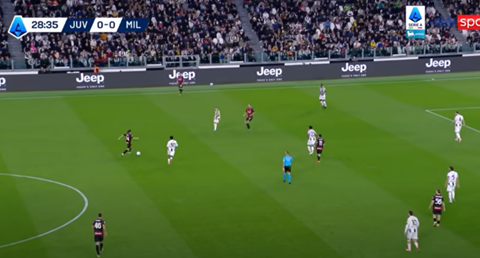
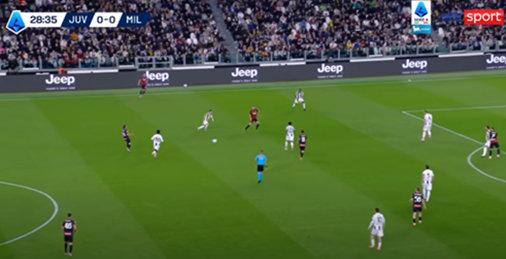
Modric carries the ball forward and then lays it off to Rabiot, who drives upfield and takes a shot from distance.
Out of possession – As mentioned, Milan sit and wait, rarely pressing or engaging physically. Their defensive phase is pure anticipation of an opponent’s mistake. Inter, on the other hand, rely on possession dominance and a strong initial press that, once bypassed, gives way to a team that often lets opponents play. Their ball-recovery numbers are solid (Barella leads Inter in this) but their interceptions and tackle numbers are low.
Goalkeepers – Sommer’s season has been unremarkable. Even with some improvement before the break, his save percentage remains mediocre at 71.9%. Maignan continues to rank among the best with a strong 80%. The most telling stat, though, is goals prevented: Maignan is at +1.9, while Sommer sits at –1.8 — meaning not only has he failed to prevent goals, but his numbers suggest he’s cost Inter some.
Conclusions – In short, Inter continue to thrive with their ultra-offensive style, even if it has led to a few too many defeats. Chivu seems committed to this approach, in line with Europe’s top clubs. Milan, meanwhile, are perfectly comfortable in Allegri’s defense-and-counter blueprint. Both sides are interpreting their managers’ ideas well, which makes it hard to name a clear favorite — even if Inter currently appear better equipped to break down Milan’s defensive block. However, the return of key players like Rabiot could raise Milan’s attacking quality and trouble Inter’s not-so-impermeable defense. And with it being a derby, unpredictability is guaranteed.