
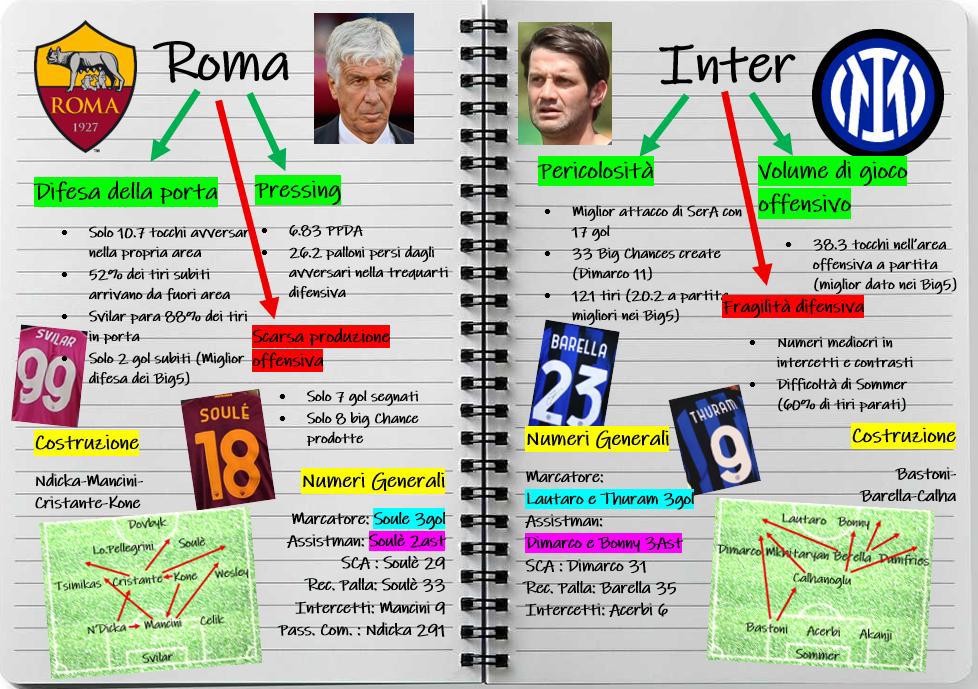
Gasp vs Chivu – The international break is over, and Serie A returns right away with a marquee matchup. League leaders Roma will try to defend their top spot at the Olimpico against an Inter side on the rise after a shaky start to the season. Gasperini will face Cristian Chivu, whom he coached briefly during his short stint with the Nerazzurri nearly 15 years ago.
Inter’s attacking power – Even though Inter currently sit fourth in the standings, the numbers speak clearly to anyone who follows football analytics: their attacking production is far ahead of the rest of Serie A. The stats are stunning, placing them among the most dangerous teams in Europe as well.
Let’s start with the basics: Inter have the best attack in Serie A with 17 goals scored and rank third among Europe’s top five leagues in goals per game. Their top scorers are Thuram and Lautaro Martínez, both with three goals.
Here’s a breakdown of the numbers that highlight just how dominant Chivu’s side has been going forward:
- Inter have created 33 big chances, by far the most in Serie A (Napoli are a distant second with 16). Dimarco alone has created 11 of them.
- They average 2.08 expected goals (xG) per game, ranking fourth among Europe’s top five leagues in attacking threat. The gap with the next best Italian team is significant—Napoli average 1.62 xG.
- Where Inter truly dominate, though, is in shooting volume: Chivu’s players have taken 121 total shots (Thuram leads with 17), averaging 20.2 per game, the highest figure among the big five European leagues.
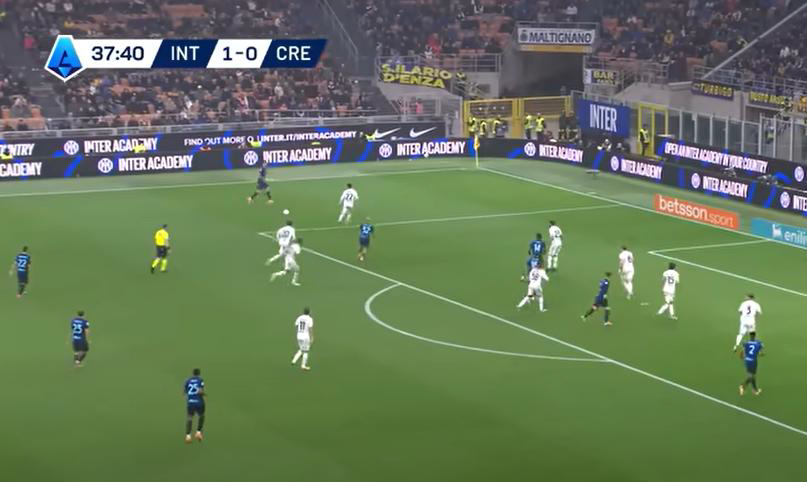
In their build-up play, Inter push nearly all their outfield players up to the edge of the opponent’s box.
But it’s not just Inter’s attacking efficiency that stands out—it’s the sheer volume of their offensive play:
- Inter are the Serie A team with the most touches inside the attacking box, averaging 38.3 touches per game, the highest figure across Europe’s top five leagues. They also lead the big five leagues in completed passes inside the opponent’s box, with Thuram topping the individual chart at 9.02 per game.
Roma’s high pressing strategy – When it comes to attacking numbers, Roma can’t really compete: they’ve scored just 7 goals (compared to Inter’s 17) and created 8 big chances (to Inter’s 33). But if we flip the script and look at the defensive side, Gasperini’s team excel. Roma boast the best defensive record in Serie A, having conceded only 2 goals, and they also have the best defense across Europe’s top five leagues, allowing just 0.33 goals per game.
The key factors behind Roma’s defensive solidity lie in their ability to keep opponents away from the box—and in their goalkeeper:
- While Inter lead in touches inside the attacking box, Roma have allowed the fewest opponent touches in their own box among all teams in the big five leagues—just 10.7 per game.
- 52% of the shots Roma have faced come from outside the box (30 out of 58 total, with both goals conceded coming from distance), the best rate in Serie A. Only 5% of the shots they face come from inside the six-yard box (only Atalanta do better at 4%).
- Svilar ranks as the second-best goalkeeper in the top five leagues with an 88% save percentage (for comparison, Sommer is at 60%).
In other words, Gasperini’s Roma defend effectively without sitting deep, avoiding packing the box and instead doing the opposite—preventing opponents from getting close by regaining possession early. In this sense, Roma also dominate the metrics that measure pressing quality:
- PPDA (Passes Per Defensive Action) – Roma allow opponents just 6.83 passes on average before regaining possession, the best figure not only in the top five leagues but across the top seven in Europe.
- Opponent turnovers near or inside the box – Roma force 26.2 per game, the best mark in Serie A.
- Ball recoveries – or as commentators often say, “second balls” – Roma have made 276 recoveries, first in Serie A by a wide margin (Soulé leads the team with 33 recoveries).
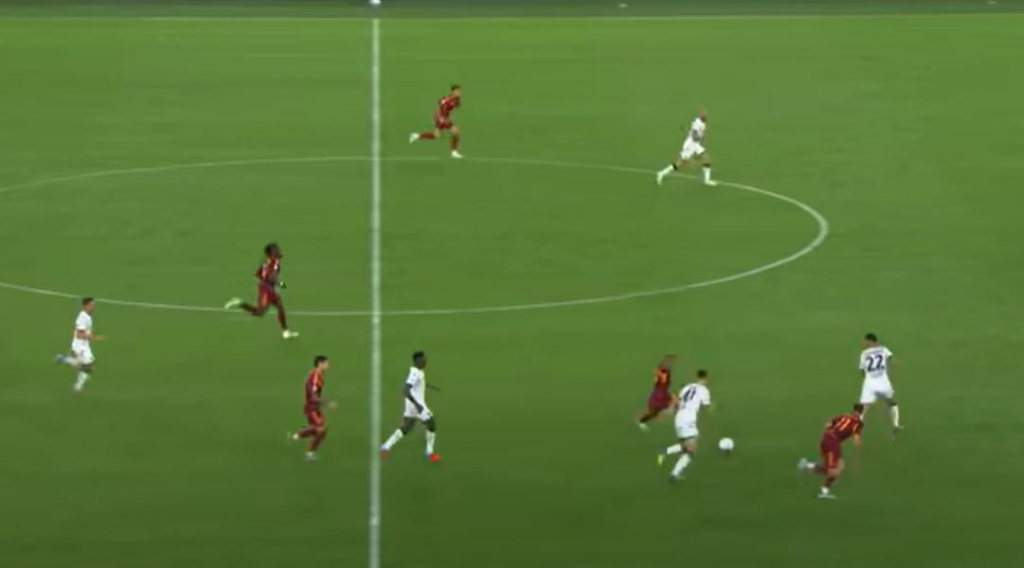
At the first poor touch from an opponent, Roma immediately swarm to win the ball back.
Inter’s build-up play – When it comes to building from the back, Inter rely heavily on Bastoni, Çalhanoğlu, and Barella, who are the main creative outlets in Chivu’s system. The two Italians, supported by the Turkish midfielder, look to move the ball quickly after a brief defensive phase, either spreading it wide to the wing-backs Dumfries and Dimarco, or going direct to Thuram.
Compared to Inzaghi’s version of Inter, the biggest change under Chivu is the constant push to transition rapidly and flood the attacking half with numbers. The Nerazzurri make full use of their wing-backs’ attacking qualities: they lead all teams in Europe’s top five leagues in crosses per game (27.3), and Dimarco has delivered more crosses than any other player across those leagues.
Roma’s build-up play – Roma’s possession structure revolves around a square of Mancini, N’Dicka, Cristante, and Koné. The Frenchman and the Ivorian handle the short passing and ball-carrying phases to push the team forward, while the two Italians are mainly responsible for vertical passes and quick transitions. Mancini and Cristante’s choices mirror those of their Inter counterparts: they look to find width through the wing-backs or play directly to Soulé or one of the strikers.
Out of possession – We already know Roma are strong defensively, but interestingly, they rank last in Serie A for tackles won. Gasperini doesn’t prioritize physical duels; instead, his team applies aggressive collective pressure and excels in interceptions, with Mancini and N’Dicka leading the way.
Inter, on the other hand, rely more on dominance in possession and an intense initial pressing phase. However, once opponents break that first press, the Nerazzurri tend to sit back and allow more space. This is reflected in the numbers: Chivu’s team post decent ball recovery stats (Barella is their best in that category) but relatively low figures for interceptions and tackles.
Conclusion – Roma vs Inter will be a clash between two sides with clear and contrasting football philosophies—both willing to leave space on the field, but not inside it. Despite the current standings, Inter appear to start with a slight edge: their offensive firepower could test Roma’s defensive organization, especially since the Nerazzurri have the tools to exploit Roma’s high defensive line and are very dangerous from long-range shots, one of the Giallorossi’s few weak spots.
On the other hand, Roma could take advantage of Inter’s struggles when forced to defend deep—something that often happens in big games—and also capitalize on Sommer’s recent dip in form, which could be a key factor. However, for Gasperini’s team to truly challenge the odds, they’ll need to find more sharpness in the final third, the one area still holding them back.