
Tomorrow, June 14, at Miami’s Hard Rock Stadium, the first edition of the new FIFA Club World Cup officially kicks off at 8:00 PM local time (2:00 AM in Italy). The tournament features a revamped format, expanded participation, and cutting-edge technology. In many ways, it will serve as a live testing ground for innovations that may soon become standard across the global game.
The Tournament: 32 Teams, Truly Global Representation
After years of planning, FIFA’s new project is finally becoming reality: a Club World Cup featuring 32 teams from across the globe, divided by confederation to ensure true worldwide representation.
Europe sends the largest contingent with 12 teams. In addition to the winners of the past four UEFA Champions League titles — Real Madrid (2022 and 2024), Manchester City (2023), and Chelsea (2021) — several clubs have qualified via a multi-year ranking system: Bayern Munich, Paris Saint-Germain, Inter Milan, Juventus, Borussia Dortmund, Atletico Madrid, Porto, Benfica, and RB Salzburg.
Rounding out the field: 6 South American clubs (CONMEBOL), 4 Asian clubs (AFC), 4 African clubs (CAF), 4 North and Central American clubs (CONCACAF), 1 team from Oceania (OFC), and 1 representative from the host country.
FIFA’s goal is clear: to create a truly global and entertaining tournament capable of attracting massive worldwide television audiences, while offering an alternative and complementary competition alongside existing continental tournaments.
The Referee of the Future: Bodycams and Advanced Semi-Automated Offside Technology
While the format itself draws attention, the biggest innovations will take place on the field — or more precisely, in how the game is officiated and presented. Pierluigi Collina, chairman of FIFA’s Referees Committee, has unveiled several groundbreaking technologies debuting in Miami.
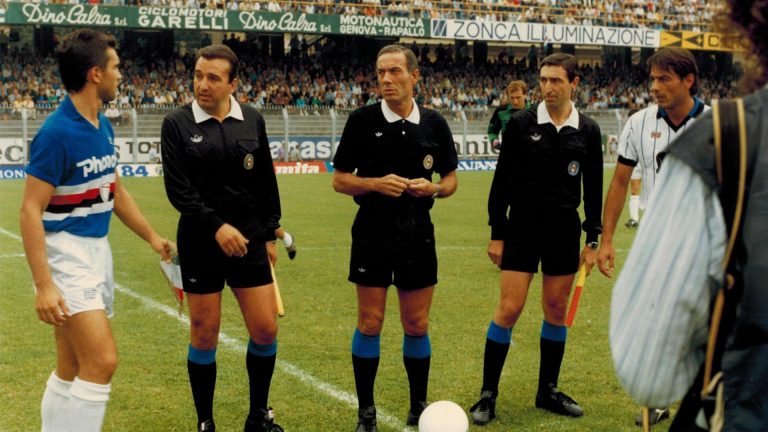
For the first time in a major FIFA tournament, all referees will wear front-facing bodycams mounted at eye level. These tiny cameras will provide exclusive, immersive footage for both stadium jumbotrons and international broadcasts. Not all footage will be broadcast live — a central production crew will filter the images to avoid unnecessary controversy — but key moments such as goals and decisive plays will be shown from never-before-seen perspectives, allowing fans to experience the game from the referee’s point of view.
Complementing the technology package is an updated version of SAOT (Semi-Automated Offside Technology). In clear offside situations, the system will send an instant signal to the assistant referee, who can immediately raise the flag. In more complex or borderline cases, VAR intervention will still play a central role.
Transparent VAR: Public Reviews and Live Explanations
Another major innovation set to redefine the relationship between fans, referees, and technology involves VAR reviews. For the first time, the footage reviewed at the monitor will be displayed live on stadium screens, allowing fans to follow every step of the decision-making process. After the review, the referee will announce the decision and explain the reasoning via an open microphone.
This system has been sporadically tested in certain competitions — such as Italy’s Coppa Italia semifinals and final (though not fully implemented due to a lack of VAR incidents) — but now it’s being adopted on a global stage. Collina’s stated objective is to increase transparency and reduce post-match controversies.
Faster Pace, Less Time Wasting
FIFA is also targeting a faster, more fluid game. Several time management rules are being adjusted to prevent unnecessary delays. Most notably, the long-ignored six-second rule for goalkeepers is being extended to eight seconds, but with much stricter enforcement. Referees will begin counting silently once the keeper controls the ball or sets up for a goal kick; at five seconds, the referee will raise their arm and visibly count down with their fingers. If the eight-second limit is exceeded, the opposing team will be awarded a corner kick.
Additionally, quicker restarts will be required even for minor injuries, throw-ins, and set pieces. As Collina put it: “We can’t have matches with only 42 minutes of actual playing time. Fans want to see the ball in play.”
More Order on the Field: Only Captains Can Approach the Referee
In another effort to maintain order, only the team captain will be allowed to speak with the referee. Crowding, mass protests, and player entourages surrounding officials will be penalized more severely. This new approach is designed to restore authority and respect for the referees on the field.
Even the Benches Go Digital
Finally, teams will take another small but significant step toward full digitalization: substitutions will now be managed via tablets handed to team benches before kickoff — no more handwritten notes handed to the fourth official.
FIFA’s Laboratory for Global Soccer
In short, the 2025 Club World Cup is not just a showdown between the world’s top clubs — it’s also FIFA’s laboratory for the future of soccer: more technological, more transparent, faster-paced, and — in theory — more entertaining.
Global soccer is ready to enter a new era.