
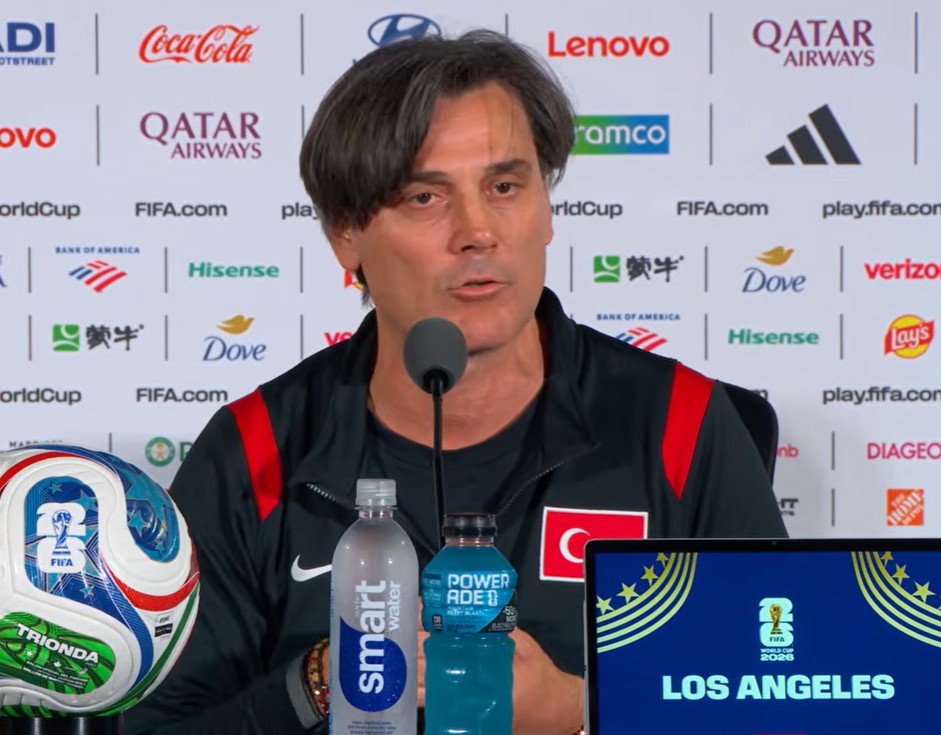
The Turkish Football Federation has confirmed that Vincenzo Montella will remain head coach despite the disappointing World Cup campaign, while plans to gift luxury homes to players have sparked widespread public criticism.
Turkey’s disappointing 2026 FIFA World Cup campaign has triggered a wave of controversy that extends far beyond the football pitch.
Following the national team’s group-stage elimination, Turkish Football Federation president İbrahim Hacıosmanoğlu confirmed that head coach Vincenzo Montella will remain in charge despite growing criticism from supporters and the media.
“Montella will stay in his position,” Hacıosmanoğlu said. “I’m convinced that if we had advanced, we could have gone at least a couple more rounds.”
The federation president also dismissed persistent rumors suggesting that Inter Milan captain Hakan Çalhanoğlu had significant influence over Montella’s tactical decisions and team selections.
One of the biggest controversies surrounding Turkey’s World Cup campaign centered on reports that Çalhanoğlu played an unusually influential role inside the squad. Additional reports claimed that the midfielder and teammate Orkun Kökçü were involved in a heated argument before the team departed for the United States, with members of Kökçü’s family allegedly becoming involved.
Hacıosmanoğlu rejected those claims, insisting there were no issues that affected Montella’s authority over the team.
While the coaching situation has generated headlines, an even bigger public debate has emerged over promises reportedly made to Turkey’s players.
Before the World Cup, federation officials pledged to reward every player involved in the qualification campaign with a luxury villa if the team reached the tournament.
Following the early elimination, many fans questioned whether those rewards should still be distributed.
Despite the criticism, Hacıosmanoğlu confirmed that the federation intends to honor its commitment.
“I will absolutely give those houses to the players, exactly as I promised,” he said.
The federation president also addressed reports claiming the homes would be built in a protected historical area, denying those allegations.
“That location is not a protected archaeological site. All permits have been obtained, and construction will begin,” he explained.
According to Hacıosmanoğlu, Turkey received approximately $14 million in FIFA bonus payments for qualifying for the World Cup. The federation added additional funds and distributed the money equally among all players who participated in the qualification campaign.
The villas are expected to be built in Mandalya Bay, along the Gulf of Güllük on Turkey’s Aegean coast between the districts of Milas and Bodrum—an area known for its crystal-clear waters, archaeological heritage near the ancient city of Iasos, and luxury marinas.
While federation leaders view the villas as a fulfilled promise to players who helped qualify Turkey for the World Cup, many supporters believe the timing is inappropriate after a tournament that ended well below expectations.
As the debate continues, one thing is clear: Turkey’s World Cup disappointment is still generating headlines long after the final whistle.