A powerhouse stadium, tactical depth, and a system built for European nights — why Borussia Dortmund are a far more complex opponent than they appear.
If Atalanta are expecting a Champions League playoff defined by one name alone, they are already heading in the wrong direction. Borussia Dortmund may be headlined by Serhou Guirassy, but their true strength lies elsewhere — in structure, environment, and collective rhythm.
The Germans arrive at this tie after closing the league phase with a home defeat against Inter, finishing 17th with 11 points. A position that looks modest on paper, yet masks a team that remains second in the Bundesliga and fully built for high-intensity European football.
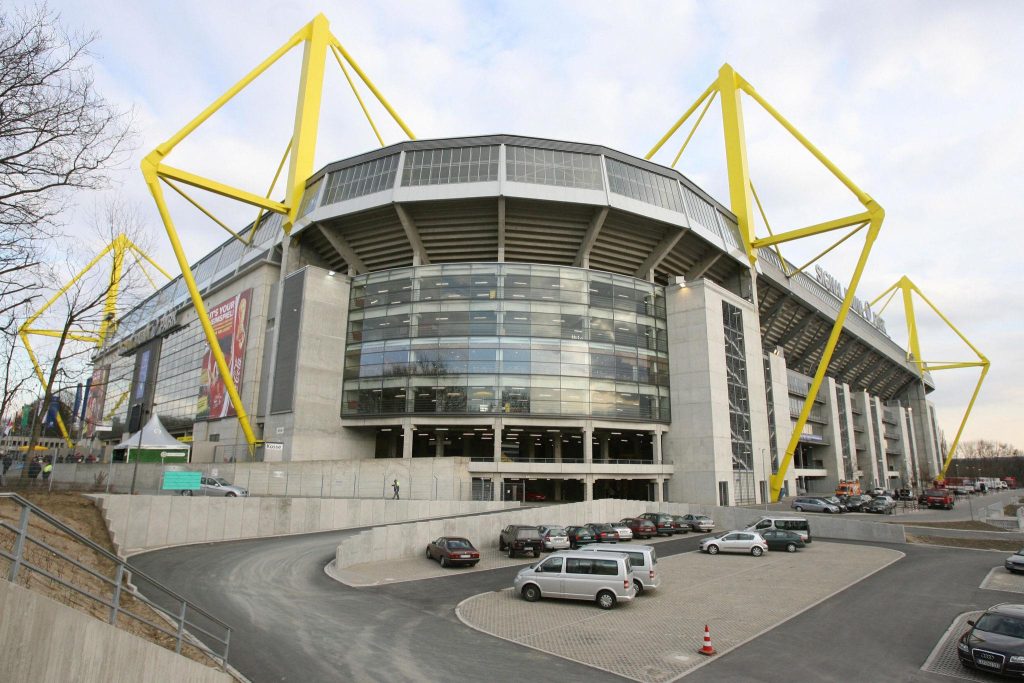
Signal Iduna Park: the First Opponent
Before tactics, before individuals, comes the stadium.
Signal Iduna Park is not just Dortmund’s home — it’s a competitive weapon. The Yellow Wall, Europe’s largest standing terrace, creates a pressure-cooker atmosphere that routinely overwhelms visiting teams. Tempo rises, decisions accelerate, and emotional momentum becomes tangible. For Atalanta, surviving the opening phases away from Bergamo will be as important as any tactical adjustment.
Guirassy Finishes — the System Creates
Guirassy is the focal point, not the engine. His Champions League numbers (three goals in seven matches) and Bundesliga output confirm his reliability in the box, but Dortmund do not depend on individual brilliance to function.
Their attacking identity is based on constant movement and occupation of space. Guirassy thrives because runners arrive around him, wide players stretch the pitch, and midfielders attack the second ball. Shut down the striker, and the threat simply shifts elsewhere.
Midfield Pace Over Possession
Under Niko Kovač, Dortmund prioritize verticality over control. The midfield pairing of Jude Bellingham and Felix Nmecha is built for acceleration, not circulation.
They don’t slow games down — they speed them up. That approach mirrors Atalanta’s own philosophy, setting the stage for a matchup where physical condition, pressing accuracy, and transitional awareness will matter more than possession stats.
Width, Rotation, and Relentless Pressure
Dortmund’s 3-4-3 system relies heavily on wing aggression. Julian Ryerson and Niklas Svensson push high, pinning back opposing wide players and forcing defensive lines to stretch.
In the front line, Maximilian Beier and André Silva rotate positions constantly, dragging defenders out of shape and opening lanes late in the move — precisely where Dortmund are most dangerous.
Where Atalanta Can Hurt Them
Dortmund are aggressive, but not impermeable.
The back three — Emre Can, Waldemar Anton, and Nico Schlotterbeck — can struggle when forced to defend large spaces repeatedly. That is exactly where Atalanta’s man-oriented pressing and late midfield runs can cause damage.
Goalkeeper Gregor Kobel often acts as the final safeguard, but sustained pressure has exposed Dortmund at key moments this season.
The Real Test
This tie won’t be decided by stopping Guirassy.
It will be decided by who controls the tempo, who absorbs the environment, and who handles transitions better when the game inevitably breaks open. Dortmund want chaos, speed, and emotional lift from their stadium. Atalanta must bring clarity, discipline, and ruthless execution.
One mistake would be focusing on a single striker.
The real secret of Borussia Dortmund is that they never attack alone.