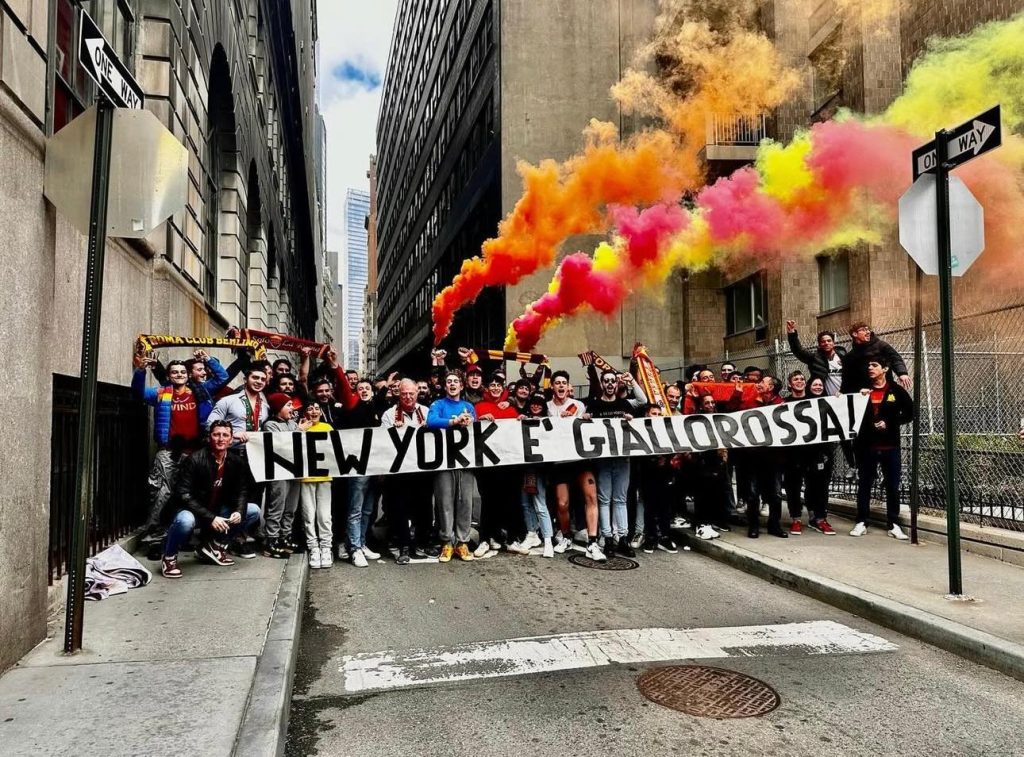
Claudio Tamborra looks back on 17 years of Roma lived “like at the stadium” in New York: dawn kickoffs with chants, European away trips, tourists, American Romanisti and a collective that never quits
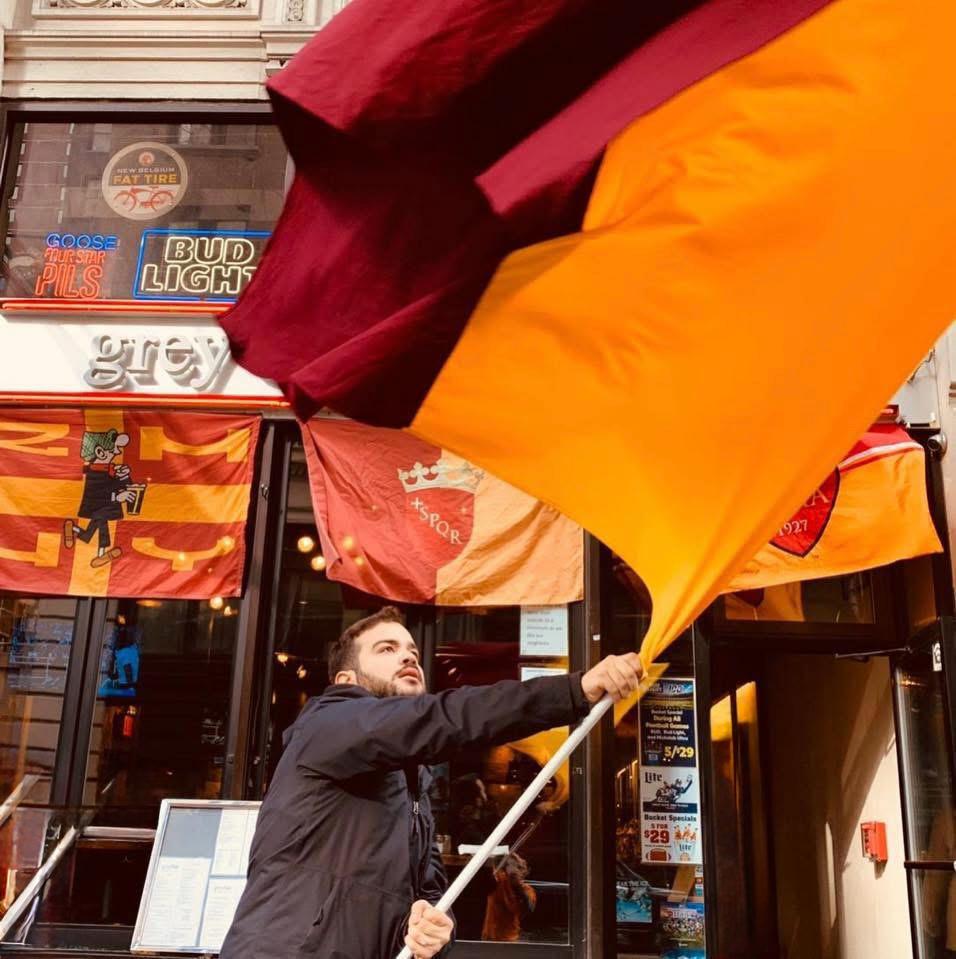
Claudio Tamborra, vice president of Roma Club New York
Let’s start from the beginning: your accent isn’t exactly Trastevere-style. How did your passion for Roma begin?
Up until I was nine I actually had an accent very similar to yours, because I’m from Monteverde. My dad is from Monteverde, my mom from Pisa. After my parents separated, my mom, my sister and I moved to Pisa. That’s where I first realized I was “different”: in Rome everyone spoke like me, in Pisa they didn’t. Today, almost as a twist of fate, people at the club are sometimes curious or joke about my Tuscan accent, but I’m used to it and I’m the first to laugh about it.
Monteverde is just a stone’s throw from Trastevere. Roman kid who moves to Pisa and then ends up vice president of Roma Club New York: how did that happen?
I was born in ’84 and I left Italy in 2008 pretty much by chance. I had just gone through a breakup and wanted an experience abroad. I would’ve liked England or Ireland, but it wasn’t possible. Spain was, and I ended up in Valencia, where I lived for three years. In 2010 I did an internship at the Italian Consulate in Miami, in the trade office, and from there I found a job in the U.S. in the building materials sector. I’ve been living here for 13 years. If in 2008 someone had told me that almost twenty years later I’d still be abroad, I would never have believed it.
New York is a huge and complex city. What role did the Roma Club play in your journey?
New York is the only city in the U.S. where I’ve never really felt like a foreigner. I’ve visited almost every state, but here I’ve always felt at home. It’s a beautiful city, but complicated, maybe even more so if you come from a provincial place like Pisa. The Roma Club helps a lot: when you arrive, you feel the need to socialize and to share something in common. For us Italians, a football team is one of the strongest bonds there is.
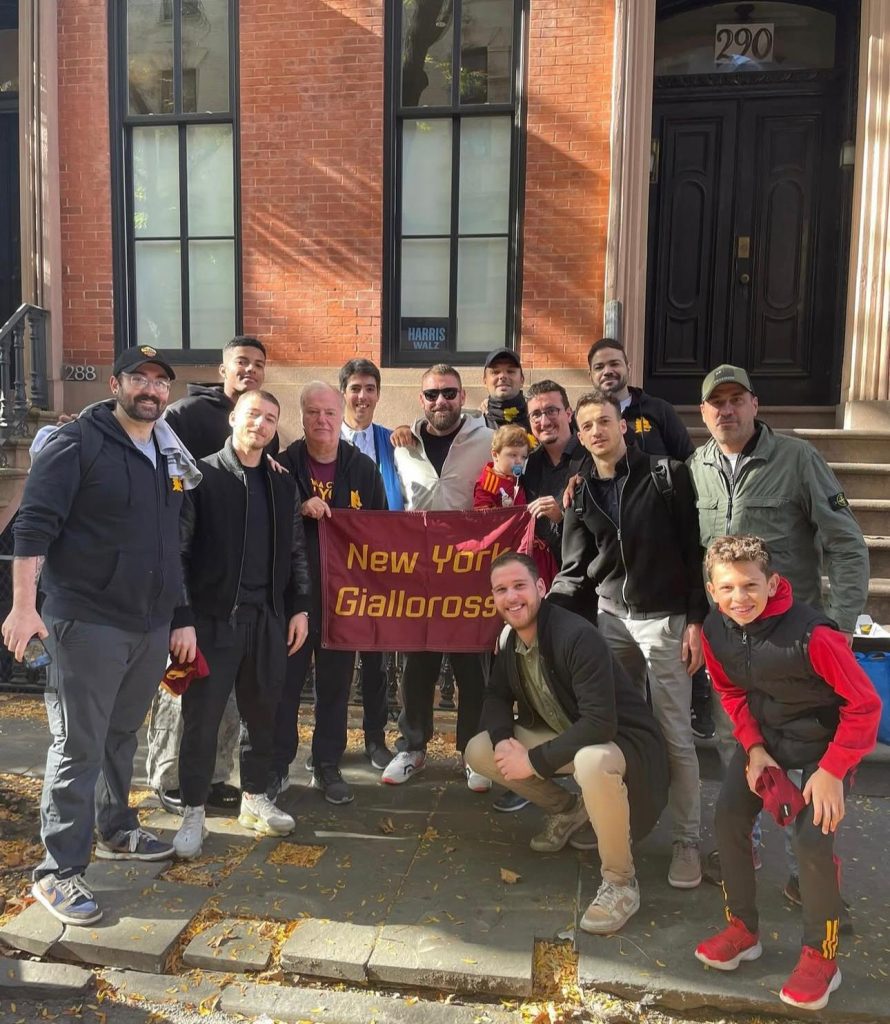
Daniele De Rossi visits Roma Club New York
When was Roma Club New York founded?
May 15, 2008. This year we turned 17. And I can say it’s not easy at all to last that long: in 17 years everything changes—people, places, life. There was Covid, there were moves, tough moments. But our strength has always been the collective. No one is indispensable; the group is. When someone leaves, someone else steps in and brings something different, and that keeps the club alive and constantly evolving, balancing respect for tradition with new chemistry.
What kind of club are you today?
At the beginning it was more “traditional”: you’d go watch the match and that was it. Not anymore. Today it’s a very intense club, even demanding if you really want to be part of it. But if you’re looking for a place that feels like being at the stadium, then it’s the right one. If instead you want to watch the match like a theater show, I’d tell you not to come to Roma Club New York.
So the atmosphere is intense.
Very. It’s loud, it’s passionate. That’s how we live Roma. Not always, but often. If you want to analyze the match tactically, you need extreme focus… otherwise it’s better to sit somewhere else.
Where do you meet now?
For several seasons now it’s been at Kestè pizzeria in Manhattan, between Gold Street and Fulton. It’s a magical place. We even experienced the club’s first European trophy win there. We’ve been to many venues, and some are close to my heart, but Kestè is home today and we’re extremely happy about that.
With the time difference, you often watch matches at dawn. What’s it like living Roma from so far away?
At first it’s tough, because you know that any chant you sing will never reach the stadium. But then you do it for yourself. And you live it as if you were there. We chant, even spontaneously, not just following what comes from TV. It’s the only way to truly feel it. The derby at 6:30 in the morning was one of the most beautiful moments we’ve experienced, regardless of the result. You set the alarm for 4:30, maybe you slept two hours, you ask yourself “why am I doing this?”. Then you go. Because it’s real love.
How many of you make up the core of the club?
In New York we’re about a hundred. We no longer do formal memberships, but the group is solid. A lot of tourists come too, which is great, but the most important thing is that we’ve built a stable community here. We go out together, play sports, share pieces of our lives.
You’ve also become a reference point for people visiting New York who want to watch Roma.
Yes, we get messages every week. They always ask if a reservation is needed, and we always answer “no reservation.” But we don’t do this to be a tourist attraction: we do it for ourselves. If others like it too, even better. In difficult moments, when the team struggles, the messages of support give us incredible strength.
Lorenzo Pellegrini, the armband and the weight of being Roman
Many Roma fans aren’t satisfied with Lorenzo Pellegrini’s performances. What’s your take?
You always have to remember that wearing Roma’s armband comes with a huge legacy: Di Bartolomei, Giannini, Totti, De Rossi. Replacing that isn’t easy for anyone. That said, I like Pellegrini, even as captain. I met him in New York when the national team was here, and I was struck by his genuine interest in the club and in how we live Roma from afar.
He’s had ups and downs, but that’s normal. Footballers are human beings and sport is also mental. I think Gasperini—Roma’s best possible choice—played an important role: at the beginning he used the stick, maybe to provoke a reaction. Today Pellegrini is performing better. I also like the idea of a more shared armband, which eases the pressure. And I can say it: in my fantasy team, Lollo is an untouchable starter and captain.
Do you manage to keep a connection with the stadium and with Rome?
Yes. We’re affiliated with UTR, our banner is always there and in Tribuna Tevere there are guys representing the club. We also travel for away matches: Glasgow, London, and we’re thinking about Athens. It’s essential not to lose contact with the real atmosphere.
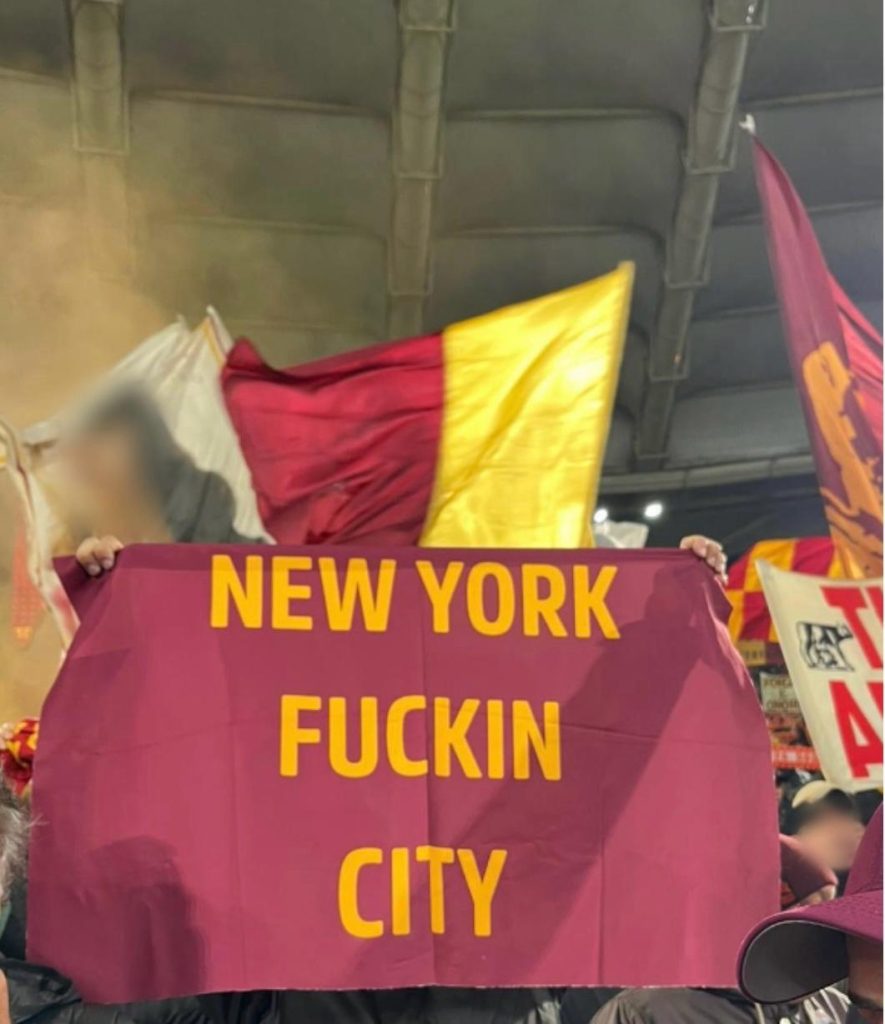
An iconic Roma Club New York banner in the Curva Sud
Have you had contact with the club or former Roma players?
Over time, yes. When Roma came to the U.S. for the International Champions Cup we organized some initiatives. We’ve met former players like Totti, Pizarro, De Rossi, Cafu, Candela, Balbo, and also current players like Mancini and Pellegrini. Not always at the club, but the connection exists.
What are the best moments Roma Club New York has experienced?
Tirana and Budapest, without a doubt. In Budapest we created a huge banner and a full stadium-style choreography. Honestly, I think it also showed what a supporters’ club can do for love of its colors.
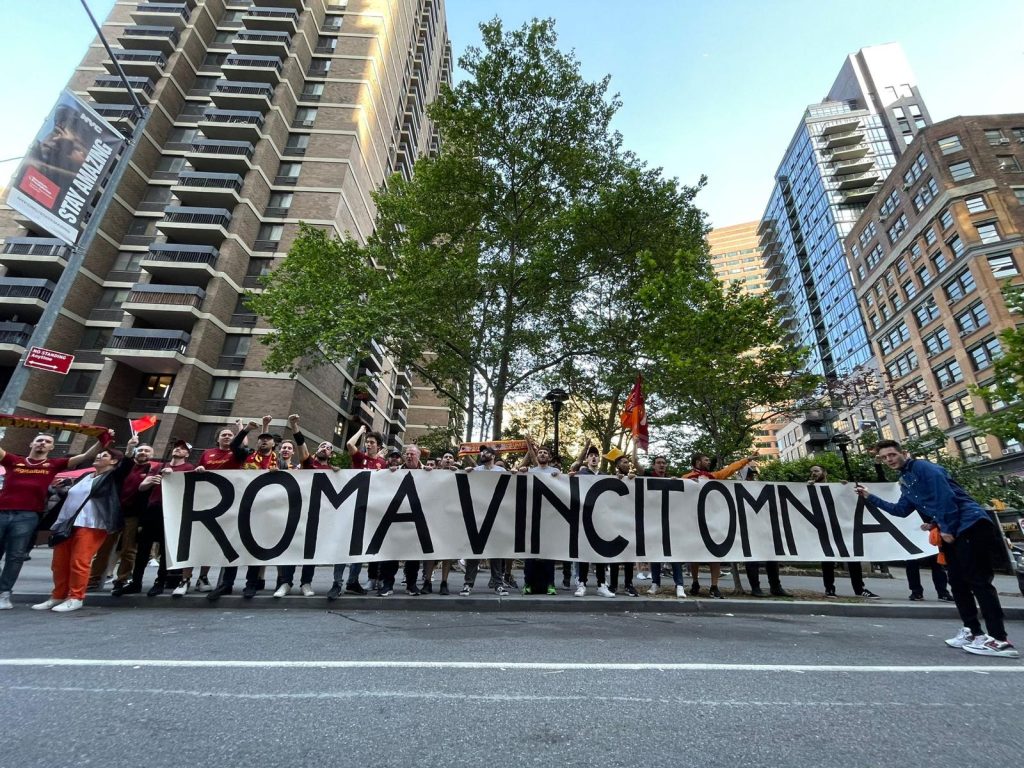
Roma Club New York supporters on the day of the Conference League Final in Tirana
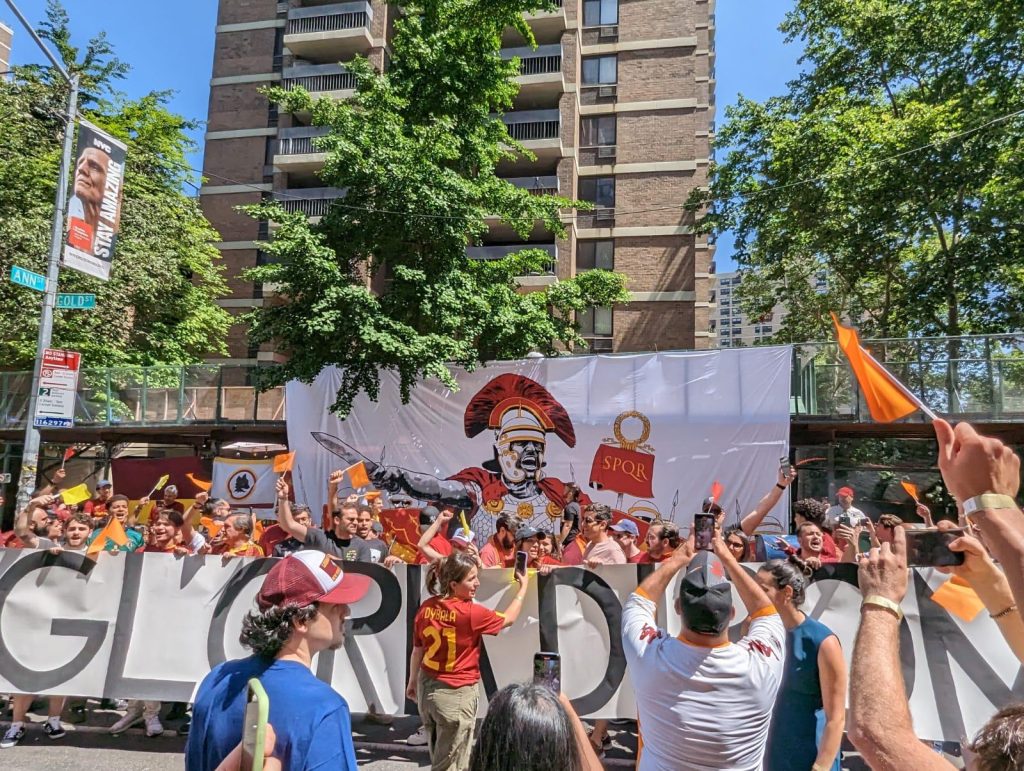
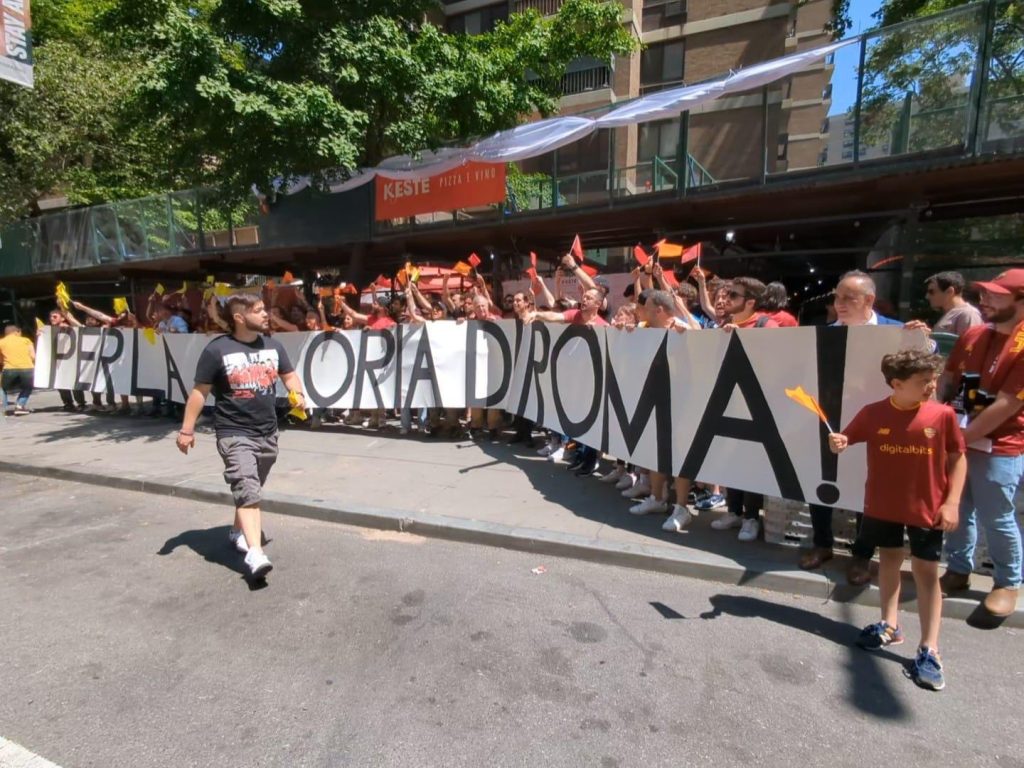
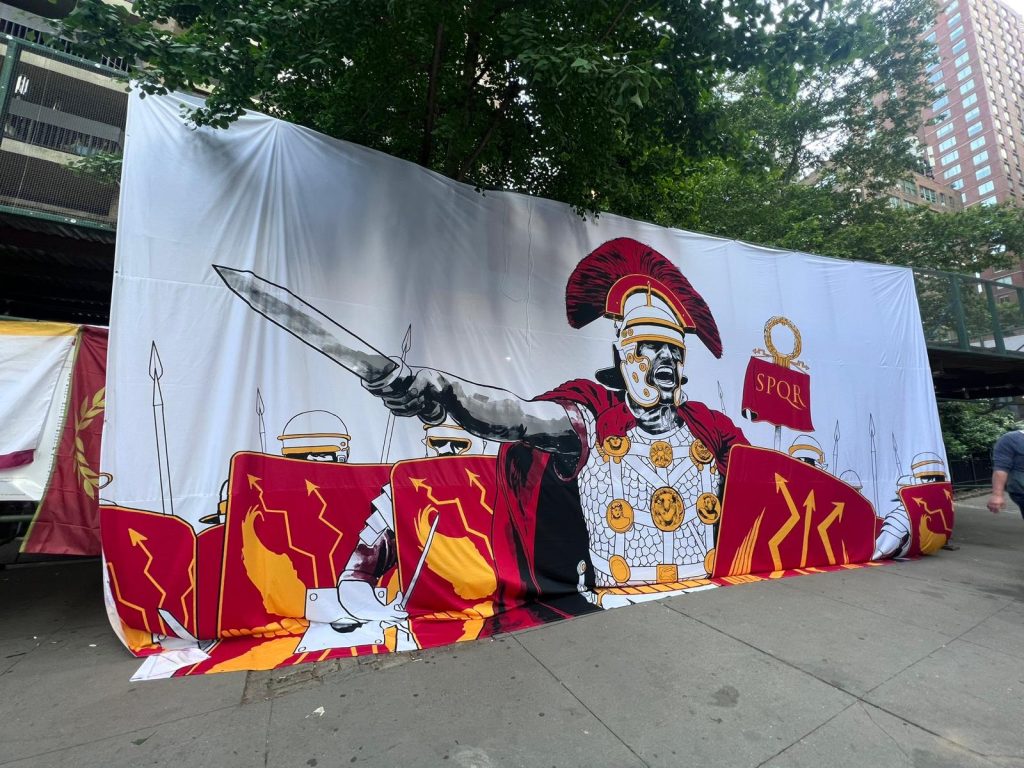
Roma Club New York supporters on the day of the Europa League Final in Budapest
MetLife in 2018 against Real Madrid was also special. In America, certain things aren’t allowed, but we did them. That’s part of our identity. It’s both an honor and a responsibility to carry the name of Roma and New York.
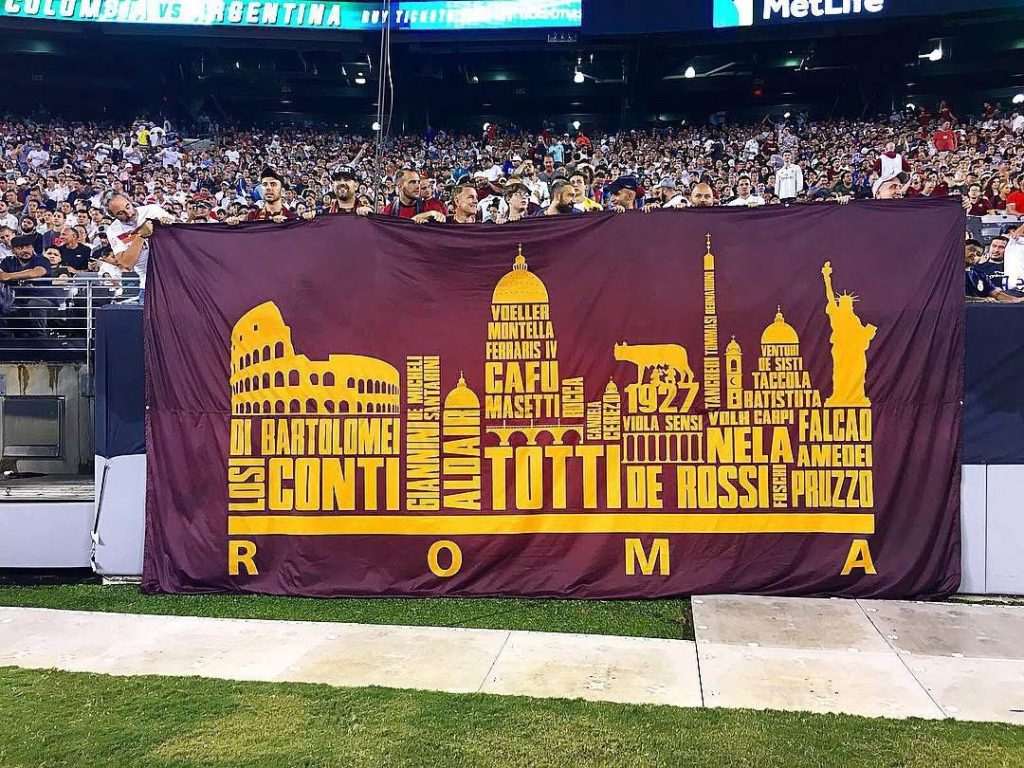
Roma Club New York supporters, displaying their banners and flags, bringing color to MetLife Stadium during one of Roma’s summer matches in the International Champions Cup (ICC).
Has this passion ever caused problems, even outside football?
On a personal level, yes. Roma is my only spouse. It’s caused problems, family drama, relationships that ended. But not just for me—it happens to many people.
The impossible podium
Let’s close with an impossible question: the top three greatest players in Roma history.
It’s incredibly difficult. Instinctively I’d say Totti, Falcao and Conti. Falcao changed Roma’s history and mentality, even though I saw him play only a little. Choosing just three is almost impossible becaRuse I can’t leave out De Rossi and Di Bartolomei, who for me are the purest expression of Romanismo. And that says it all.